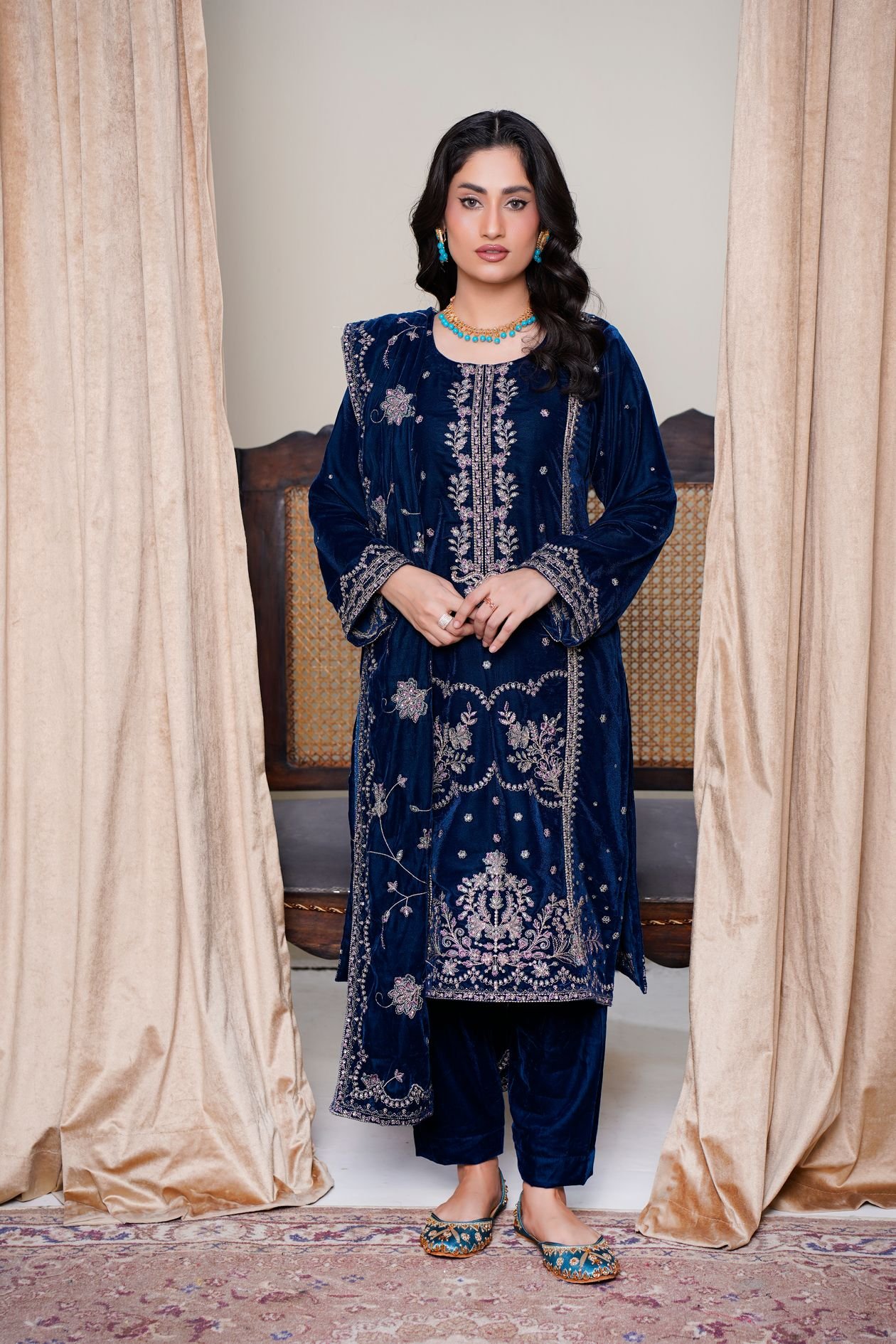
Every Pakistani family knows the same frock disappointment. A frock is bought for Eid, a mehndi or a wedding, and it looks beautiful on the hanger in the shop. Then it is worn once, and the problems begin. The embroidery is so heavy that the frock pulls at the shoulders and the child or the woman wearing it spends the whole function tugging at it. Or the flare that looked so graceful on the display falls flat because the embroidery has stiffened the fabric and killed the movement. Or the thread starts snagging on bangles and the dupatta within an hour, and by the end of the evening the design is already fraying. The problem is rarely the price paid. It is that the frock was chosen for how it looked standing still in a shop, not for how it would move, sit and be worn through a long day of greetings, photographs and dancing.
That is why frock embroidery designs deserve more thought than any other part of a festive outfit. A kurta can hide a heavy border, but a frock is all movement: the flare, the fall of the panels and the way the embroidery catches the light as the wearer walks. These eight frock embroidery designs for 2026 cover everything from a soft floral pishwas for a daytime mehndi to a dense velvet frock for a winter barat, with the fabric, fitting and checking advice you need to choose one that stays beautiful from the first photograph to the last dance. Whether you are shopping ready-made in Lahore or commissioning a karigar in Karachi, the same checks apply to every one of these frock embroidery designs.
What makes a frock embroidery design work?
Four things decide whether a frock embroidery design succeeds. The first is weight. A frock hangs from the shoulders and moves with every step, so heavy embroidery that would sit happily on a straight kameez will drag a frock down, spoil its flare and tire the wearer within an hour. The embroidery must be balanced across the panels, or the frock will hang unevenly and twist to one side. The second is placement. Work on a frock should sit where it shows while the wearer is moving: the bodice, the front panels, the hem and the sleeves, not across the whole back where it will be sat on and creased all evening.
The third is the fabric underneath. A frock lives or dies by its fall, and dense stitching on a light fabric stiffens it, while the same design on a structured fabric holds its shape beautifully. The fourth is the wearer. A frock for a six-year-old girl, a frock for a university student and a frock for a bride’s sister are three different garments, even when the embroidery looks the same in a photograph. Keep these four checks in mind as you read the frock embroidery designs below, because the right frock is always the one that passes all four on the person who will wear it, not the one with the most thread.
1. Floral embroidered pishwas frock
The floral pishwas is the most graceful frock embroidery design on this list, and the one most Pakistani women already picture when they hear the word frock. A pishwas flares from a fitted bodice into a full, flowing skirt, and the embroidery follows that shape: small flowers and leaves scattered across the bodice, then trails of floral work running down the front panels to a heavier border at the hem. On a pastel or jewel-toned base, two or three thread colours with a metallic accent give the frock a festive lift without making it heavy, while on a white or cream base, soft resham in rose, sage and gold keeps it elegant enough for a daytime function.
Ask your tailor to keep the embroidery lighter on the upper panels and heavier only at the hem, so the frock keeps its movement and does not pull forward at the shoulders. The bodice should be fitted properly before any embroidery begins, because a pishwas that is loose at the waist will let the embroidered panels swing and tangle, while one that is too tight will pull the stitches and distort the flowers. This is the frock to choose for mehndi afternoons, nikkah ceremonies and Eid lunches, because it photographs beautifully, moves gracefully and suits almost every age, from a teenage girl to her grandmother.
2. Angrakha-style frock with embroidered panels
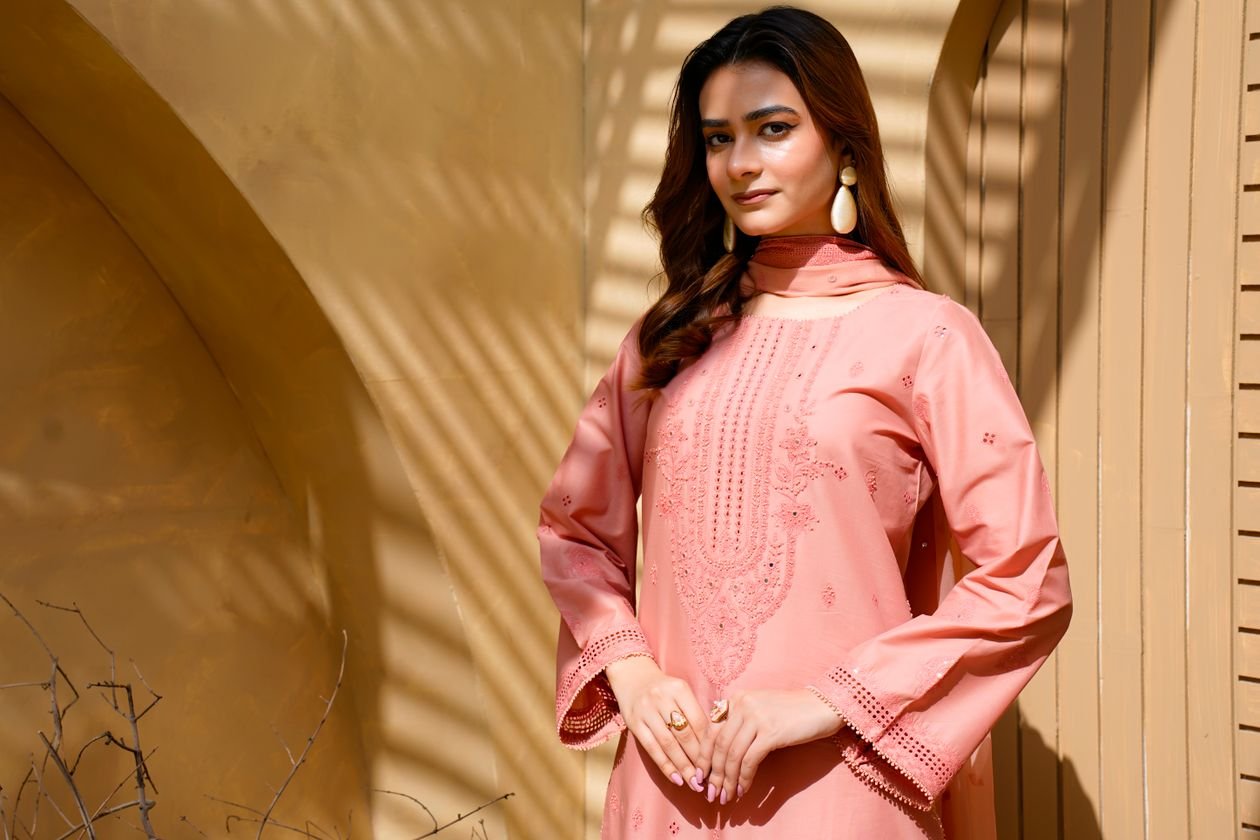
The angrakha frock, with its crossed front and side ties, is one of the oldest frock shapes in South Asia, and among all frock embroidery designs, embroidery suits it better than almost any other style. The crossover front gives the karigar a natural frame: the embroidery follows the diagonal opening, runs down the front panels and finishes in a border at the hem, so the design always looks deliberate rather than scattered. Small paisleys, geometric repeats and tiny bootis all work well in this shape, because the panels give them a clear direction and keep the rest of the frock calm and balanced.
The fitting detail that matters most is the overlap. Mark the crossing point while wearing the undergarments and jewellery you plan with the frock, because an angrakha that is modest on the tailor’s table can gape once the fabric settles and the wearer moves. Ask for the ties to be stitched firmly and the inner panel to be properly faced, so the frock stays closed through a whole evening of sitting, standing and dancing. This design is a strong choice for formal dinners and wedding functions in silk, chiffon and organza, where the crossover shape does the work of a whole design and the embroidery only needs to follow it.
3. Panelled frock with vertical embroidery
A panelled frock, built from long vertical panels sewn together from bodice to hem, is the most flattering frock embroidery design for women who want to look taller. The embroidery runs in narrow vertical lines down the seams between the panels, which draws the eye downward and makes the whole silhouette look longer and slimmer. Each panel can carry its own motif, a vine, a row of paisleys or a geometric repeat, and the panels can alternate between plain and embroidered fabric, so the frock has rhythm without being covered in work.
The detail that decides this design is the seam itself. Embroidery worked across a seam will pucker and pull, so each panel must be embroidered separately and joined only after the work is finished, with the motifs matched carefully at the seams. Ask your tailor to show you one finished panel before the rest are made, because a motif that is cut in half by a seam looks like a mistake, while a motif centred on a panel looks deliberate. This is the frock to choose for walima dinners and formal evenings, especially in deep colours like maroon, emerald and navy, where the vertical lines and the embroidery work together to create a long, elegant fall.
4. Chikankari frock for daytime elegance
A white-on-white chikankari frock is the most elegant design on this list, and the one that never goes out of fashion. Fine white thread is worked in shadow stitches, French knots and tiny floral jaalis across a white or ivory frock, so what you see is texture rather than colour: a pattern that appears when the light moves across the fabric as the wearer walks. It is cool to look at and cool to wear, which is exactly why it has been the first choice for summer formal wear in Lahore and Lucknow for generations, and why it suits a frock so well, since the flare shows off the texture with every step.
The detail that matters most is the quality of the stitching. Chikankari depends entirely on even, tiny stitches, and a single uneven row shows up clearly on white fabric, so judge this design by the sample, not by a photograph. Ask to see the reverse side as well: neat, short thread ends mean the work was finished properly, while a tangled back will show through the fine fabric and spoil the clean look. Pair it with a plain pastel chiffon dupatta and simple silver jewellery, and the frock needs nothing else. For a closer look at this craft, read our guide to chikankari embroidery designs.
5. Mirror-work frock for mehndi and festive wear
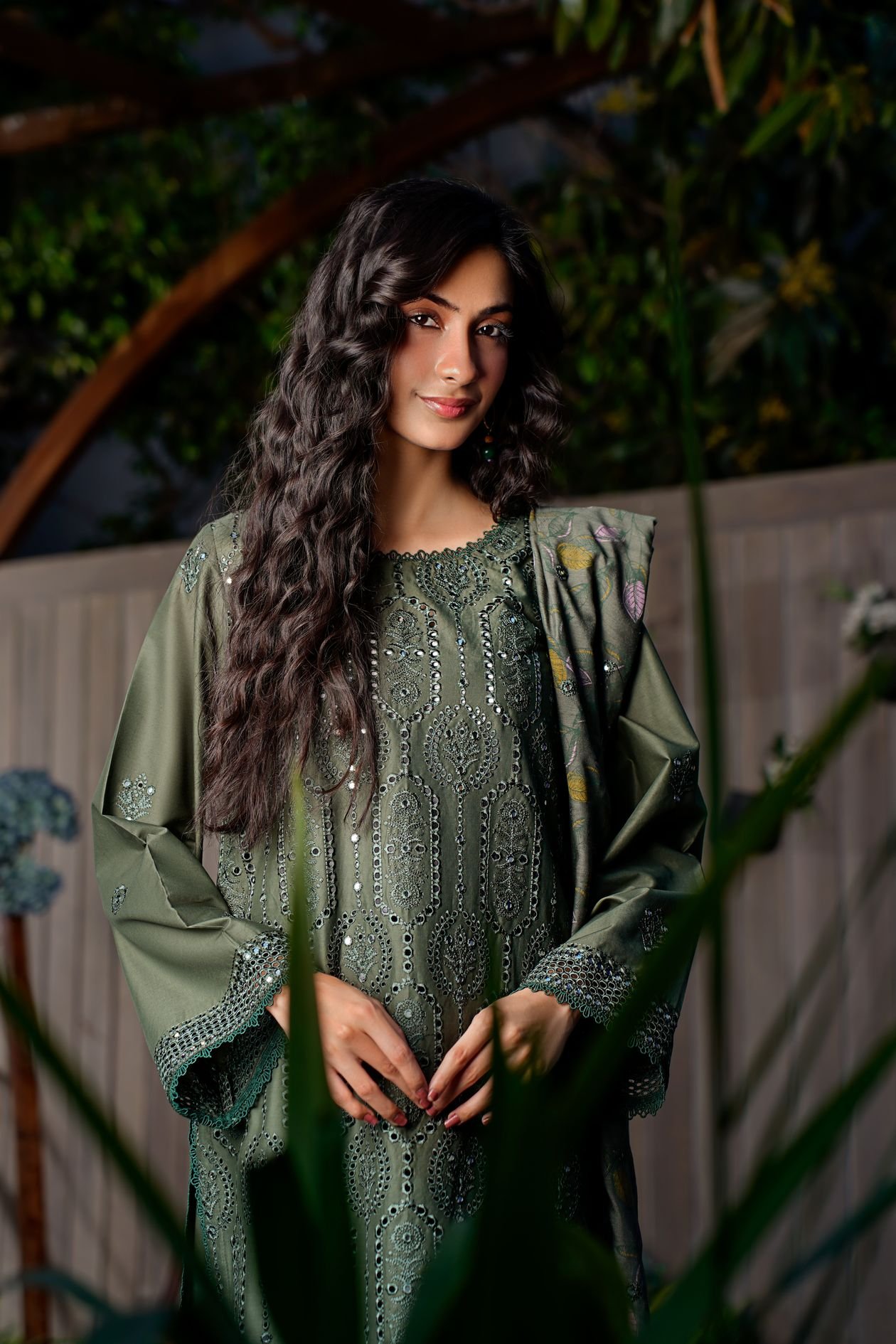
Mirror work, or sheesha embroidery, is the most joyful frock embroidery design on this list, and the one made for mehndi nights, mayoun afternoons and festive gatherings. Small mirrors are stitched into the fabric and framed with bright thread in rings, flowers and geometric shapes, usually across the bodice and the hem, so the frock catches the light and sparkles every time the wearer moves. On a yellow, green or hot pink base, the mirrors turn an ordinary frock into a celebration outfit, which is why this design has been a mehndi favourite in Punjab and Sindh for as long as anyone can remember.
The risk with mirror work is the mirrors themselves. Every mirror must be stitched firmly, not glued, because a glued mirror will fall off within one wearing and leave a bare patch that cannot be hidden. Before you buy, run your hand gently over the work and check that no mirror edge is sharp or loose, and ask whether the frock can be hand washed, since machine washing loosens mirrors quickly. Keep the dupatta plain or lightly bordered in the same colours, so the frock stays the hero of the outfit and the two pieces do not fight each other. Worn with gajray and simple gold jewellery, a mirror-work frock needs nothing else to look festive.
6. Velvet frock with zardozi-style embroidery
At the far end of the scale sits the velvet frock with dense zardozi-style work: dabka, naqshi, kora and sequins built up in layers across the bodice and the hem. This is bridal and formal territory, usually on velvet, silk or tissue, and it replaces jewellery almost entirely, because the embroidery itself is the ornament. The work can be deep and heavy and still look balanced, because the structure of a velvet frock carries it, and the rest of the outfit is normally kept plain below it. For winter weddings and barat evenings, no other frock embroidery design makes quite the same impression.
Weight is the honest problem here. Metallic work across the bodice pulls the front of the frock down and can distort a light fabric within one wearing, so the garment needs a structured bodice and, on heavier pieces, a supporting inner layer. Always try this frock sitting down as well as standing, with the dupatta arranged as you will wear it, and check the reverse side of the embroidery for rough knots that would irritate the skin. For more ideas on working with this fabric, see our guide to velvet embroidery designs. If the frock is the hero, everything else, including the dupatta and the jewellery, should step back and let it shine.
7. Light embroidered frock for girls
A little girl’s frock is a different garment from a woman’s, and the embroidery should respect that. The best girls’ frocks carry light, cheerful work: small flowers around the neckline, a scattering of bootis on the skirt, a pretty border at the hem and perhaps a tiny motif on the sleeves. The embroidery should be soft, flat and comfortable against the skin, because a child will not sit still for a frock that scratches, and she will not enjoy an Eid or a birthday in a garment she keeps tugging at. Bright thread on a pastel base, or pastel thread on a bright base, both work beautifully, and a touch of sequin or mirror at the hem adds just enough sparkle for a celebration.
The practical checks matter more here than the design itself. Make sure the embroidery does not cover the waistband or the back where the child will sit, because raised work there will press into her skin all day. Choose thread that is colourfast and washable, since a child’s frock is washed often and sometimes urgently, and avoid loose beads or glued stones that a small child could pull off. A frock that survives the washing machine and still looks pretty after five wears is worth far more than a frock that looks perfect once and falls apart. For more ideas for young wearers, see our guide to kids embroidery designs.
8. Schiffli and cutwork frock for summer
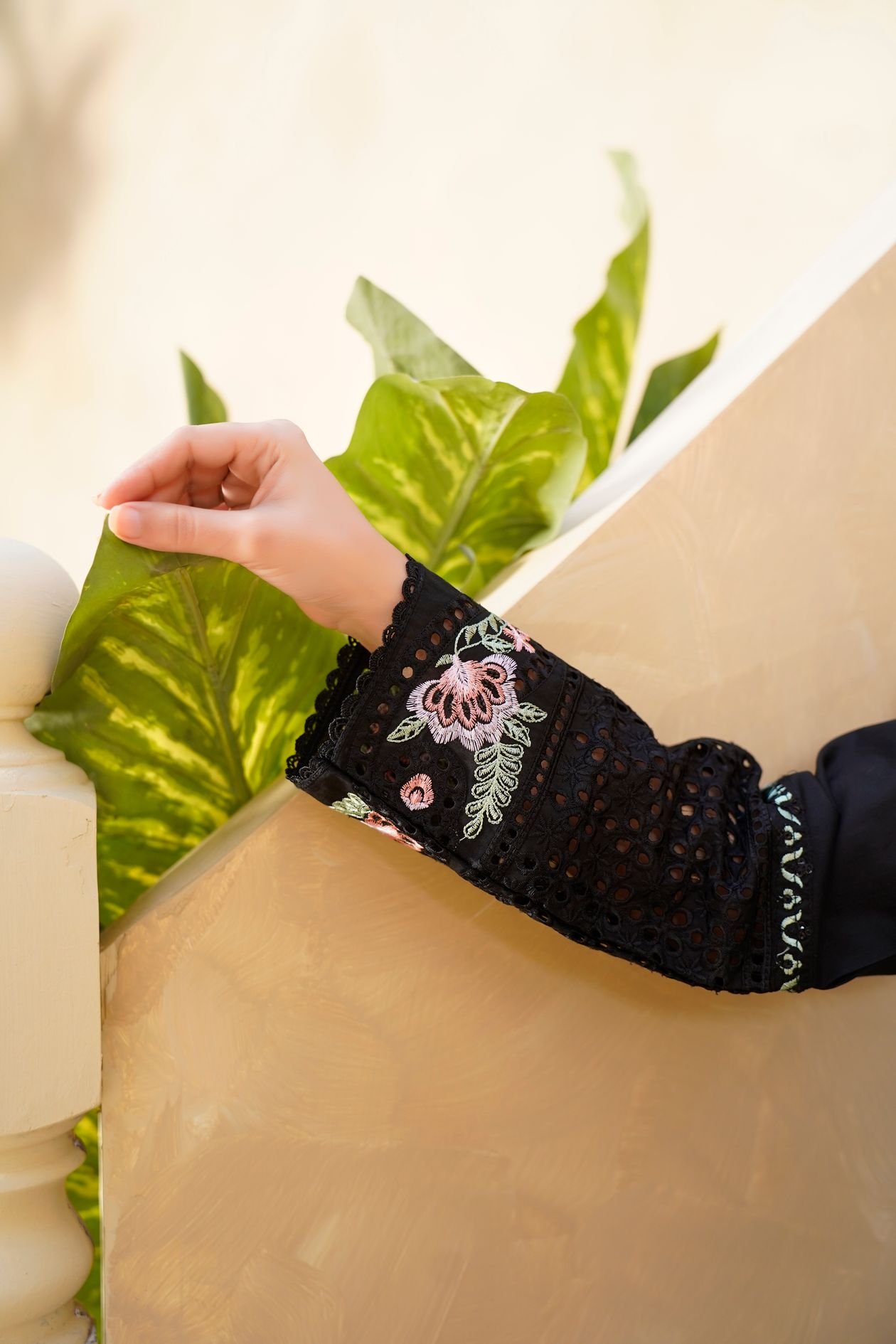
Schiffli and cutwork frocks, with their eyelet holes and openwork edges, are the airiest design on this list, and the one that suits the hottest months best. Small holes are punched and embroidered around in neat rings, often in rows along the hem, the sleeves and the neckline, so the fabric itself becomes part of the pattern. The cutwork lets air through the frock, which makes it genuinely cooler to wear, and the white or tonal threadwork gives it a fresh, crisp character that reads as expensive without trying hard. On lawn, cotton and Swiss voile, a schiffli frock is one of the most comfortable festive pieces you can own in June and July.
Check three things before you buy one. First, every eyelet must be fully finished with thread around its edge, because an unfinished hole will fray and grow with every wash. Second, the cutwork should be backed with a fine net or stabiliser behind the hem and the sleeves, so the openwork keeps its shape instead of stretching as the frock moves. Third, the holes must be small and evenly spaced: large, irregular cutwork looks impressive in a shop but weakens the fabric and tears at the seams. Worn with a plain trouser and a light chiffon dupatta, a schiffli frock is the easiest way to look dressed up in summer without feeling dressed up.
How to choose the right frock embroidery design for your occasion
Start with the occasion rather than the design catalogue, because the best frock embroidery designs are the ones chosen for the day they will be worn. A daytime mehndi or mayoun suits designs one, five and eight: light, joyful and easy to move in, with embroidery that photographs well in daylight. A nikkah or a formal dinner sits comfortably with the angrakha, the panelled frock and the chikankari frock, where the shape is elegant and the work is refined rather than loud. Designs six and two belong to weddings and formal evenings, where the frock is worn for a few hours and cleaned professionally afterwards. Finally, match the design to the wearer. A young girl needs a light, washable frock she can play in; a bride’s sister needs a frock that will survive a long day of photographs and dancing; an older woman often prefers a frock with embroidery concentrated at the hem and sleeves, where it shows without weighing on the shoulders.
Then decide by body and comfort. A tall woman can carry a full pishwas with a heavy hem, while a shorter woman often looks better in a panelled frock with vertical embroidery that lengthens the silhouette. If you wear a hijab or keep your dupatta over your head, the visible part of the frock is the front panels and the hem, so spend the embroidery budget there instead of spreading it across the back where nobody will see it. And always try the frock on and walk in it, sit in it and raise your arms in it before you commit. A frock that is beautiful only while standing still in front of a mirror is not finished.
Fabric and thread choices for frock embroidery
The frock is the most moved-in garment in a Pakistani wardrobe, so fabric and thread choices for frock embroidery designs are practical, not decorative. Lawn and voile need light thread, open designs and a stabiliser behind the work, or the flare will pucker by the third wash. Cambric, cotton silk and khaddar carry medium-density designs comfortably and are the safest base for most of the designs above. Chiffon and organza need the embroidery worked on a frame with even tension, and the reverse finished neatly, because the back of the work shows through the sheer fabric. Velvet and silk carry the heaviest work, but they need a structured bodice and a proper lining, or the embroidery will drag the whole frock out of shape.
For thread, resham gives a soft sheen and washes well, which is why it dominates everyday and festive frocks alike. Metallic tilla and zari look richer but can feel rough against the skin, so keep them on the outer edges of a design rather than the inner edges that touch the body. Whatever the thread, ask for a small stitched sample on your actual fabric and wash it once before the full frock is made. Thread that bleeds or puckers on the sample will do exactly the same on the finished frock, only then it will be too late to change.
What to check before buying or commissioning frock embroidery
Whether you are buying ready-made or sitting with a karigar, run the same checks on any of these frock embroidery designs. Look at the reverse side first: neat, short thread ends and a clean lining mean the work was finished properly, and they tell you more than the front does. Hold the frock up and look along its hem; the flare should fall evenly, with no panel where the embroidery pulls the fabric into a wave. Check that every mirror, bead and sequin is stitched, not glued, and tug gently at a few to be sure. Try the frock on, walk in it, sit down and raise your arms. A frock that is comfortable only while standing still is not finished.
For a custom order, agree the design on paper at full size before the fabric is cut. Mark the length of the frock, the width of the flare, the placement of the embroidery and the exact point where any border ends, and keep a photograph of that drawing with the agreed price and delivery date. Ask which parts are hand work and which are machine work, and pay for each accordingly; both have their place, but they should never be priced as each other. A good maker will welcome these questions, because they protect him as much as they protect you.
How to care for embroidered frocks
Most frock damage happens in the wash and at the ironing board, not during wear. Turn the frock inside out before washing so the embroidery faces away from other clothes, and keep frocks with mirrors, pearls, sequins or metallic thread out of the machine altogether unless the care label says otherwise; gentle hand washing in cool water protects both the thread colour and the fabric around it. Never wring an embroidered frock. Press the water out flat between towels, then dry the frock on a hanger so the flare keeps its shape and the hem does not crease.
Iron from the reverse side, over a soft cloth, and never press directly on raised work, mirrors, pearls or sequins. If a loop of thread lifts at the hem, do not pull it and do not cut it short; take it to a tailor, who can draw it through to the back and secure it in minutes. Store formal frocks with the flare unfolded where possible, hanging rather than folded, because a hard fold through dense embroidery can crack metallic thread over time. Ten minutes of this care after each wear is what keeps a good frock looking new for years.
Frequently asked questions
**Which frock embroidery design suits a short height?** A panelled frock with vertical embroidery, or a pishwas with a slim floral trail down the front panels. Both draw the eye downward and make the wearer look taller. Avoid wide, heavy borders at the hem and dense all-over work, which shorten the silhouette.
**Can embroidery be added to a ready-made frock?** Yes, in most cases. A tailor can add a floral trail, a border or a panel to an existing frock if the fabric is sound and there is access to the reverse side. Small motifs and hem borders are the easiest additions; a full bodice or a deep zardozi panel usually needs the frock to be opened and re-lined.
**Which is better for a frock, hand embroidery or machine embroidery?** Hand embroidery gives softer texture and is easier to place precisely on panels and curves, which is why it is preferred for formal and bridal frocks. Machine embroidery is consistent, quicker and more affordable, and works well for repeated borders and everyday frocks. The right choice depends on the design, the fabric and your budget, not on one being universally better.
**How much does frock embroidery cost in Pakistan?** It varies widely with the design, thread and city. A simple machine-embroidered border or floral trail on a frock is usually the most affordable option, while hand-worked zardozi, mirror work or pearl frocks cost considerably more because of the hours involved. Always agree the full price, including lining and finishing, before work begins, and ask for a sample if the design is dense or metallic.