
Every wedding season brings the same disappointment. A saree is chosen for the embroidery glimpsed in a shop photograph, or for the way it looked on a model at a fashion show, and then it is worn once and folded away. The pallu is too heavy to stay on the shoulder, so it keeps slipping all evening. Or the embroidery sits only on the border, so the saree looks plain from the front and overdone from the back. Or the metallic thread scratches at the waist and the blouse, which is exactly where a saree spends most of its time against the skin. The problem is rarely the price paid. It is that the saree was chosen for how it looked on a hanger, not for how it would be draped, walked in, sat in and photographed over a whole barat or walima night.
That is why saree embroidery designs deserve more thought than any other part of a formal outfit. A kurta can be plain and still look finished, but a saree is the whole occasion: it carries the colour, the drape and the embroidery of the outfit in six yards of fabric. These eight saree embroidery designs for 2026 cover everything from a soft resham floral saree for a nikah to a dense zardozi bridal saree for a barat, with the fabric, placement and checking advice you need to choose one that stays beautiful from the first photograph to the last dance. Whether you are shopping ready-made in Lahore or commissioning a karigar in Karachi, the same checks apply to every one of these saree embroidery designs.
What makes a saree embroidery design work?
Four things decide whether a saree embroidery design succeeds. The first is weight. A saree hangs from the waist and the shoulder with nothing to hold it up except pleats and pins, so heavy embroidery pulls the pallu down and makes it slip. The work should be balanced across the saree, with the heaviest motifs on the pallu and the border, and the body kept light. The second is drape. A saree is made to fall in soft folds, so embroidery that stiffens the fabric will make the pleats stand away from the body instead of falling cleanly. The best sarees leave enough plain fabric between the motifs for the drape to survive.
The third is the blouse. A saree is a two-piece outfit, and the embroidery on the saree must be planned together with the blouse, not separately from it. A heavily worked saree needs a quiet blouse, and a plain saree can carry a richly embroidered blouse. The fourth is the occasion. A mehndi saree, a barat saree and a walima saree are three different garments, and a design that is perfect for one will look wrong at another. Keep these four checks in mind as you read the saree embroidery designs below, because the right saree is always the one that passes all four with your outfit, not the one with the most thread.
1. Zardozi saree with gold threadwork
The zardozi saree is the most regal design on this list, and the one most Pakistani brides still dream of for their barat. Gold and silver metallic thread, dabka, naqshi and kora are couched onto deep red, maroon or emerald silk in bold paisleys, scrolling vines and heavy borders, often with small pearls and sequins added for depth. The work is densest on the pallu and along the border, and it thins out across the body of the saree, so that the saree looks rich without becoming a solid sheet of metal. On a deep red base, the gold thread glows against the fabric, and the saree becomes the most formal piece in the room.
The detail that matters most is the weight of the pallu. A fully worked zardozi pallu can weigh down the shoulder and keep slipping no matter how many pins you use. Before you commit, drape the saree with the blouse and walk in it for at least fifteen minutes in the shop, sit in it and climb a step or two. If the pallu pulls down or the border digs into your waist, ask for the work to be lightened on the upper part of the pallu. A good karigar will concentrate the heaviest zardozi on the border and the end of the pallu, where it shows most and weighs least, and keep the body of the saree in lighter threadwork. This is the saree to choose when the occasion is the grandest one of the season, and it is worth paying for properly, because a cheap copy will shed its dabka before the night is over.
2. Resham floral saree with soft threadwork
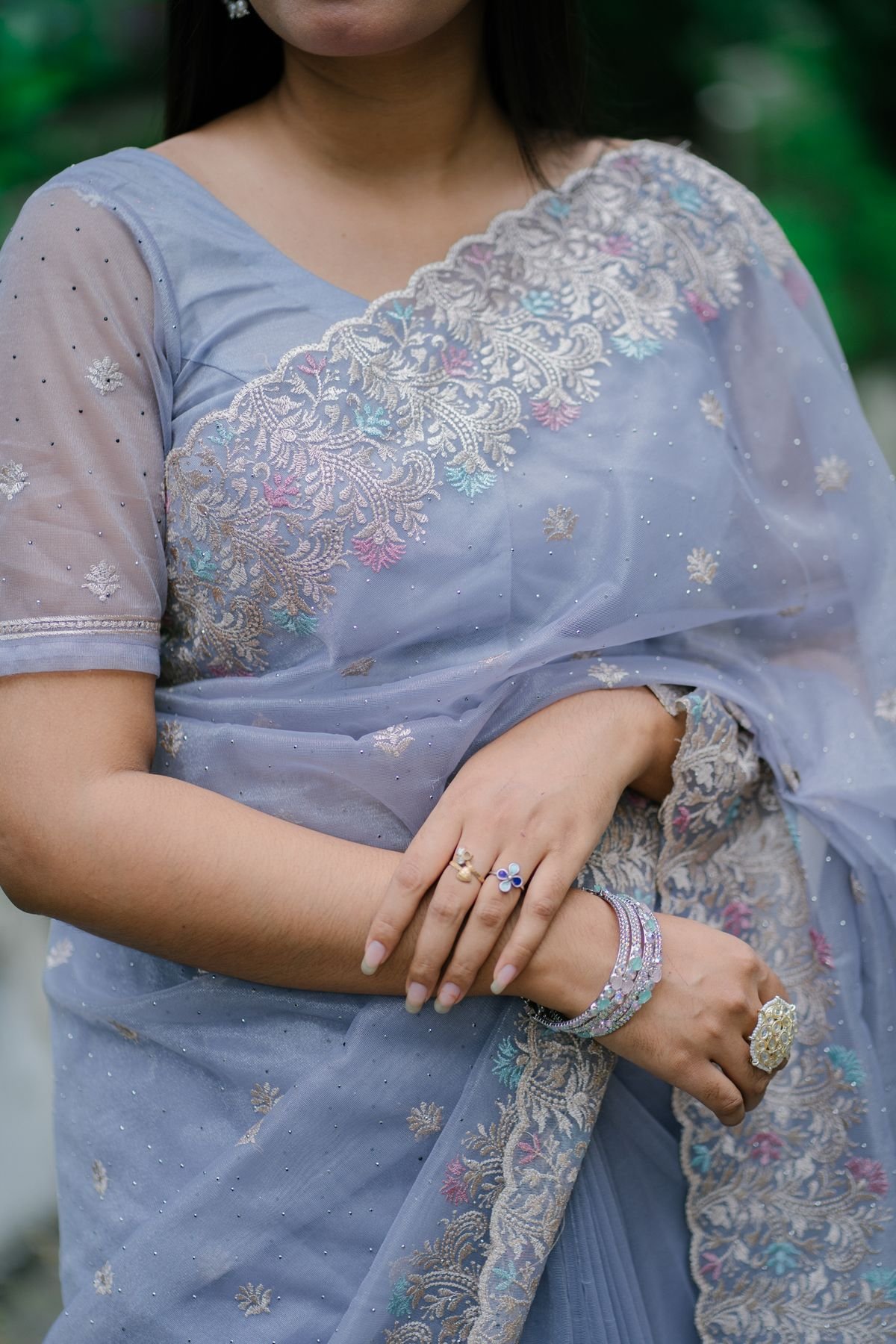
The resham floral saree is the most wearable design on this list, and the one most women reach for when they want embroidery that feels as soft as it looks. Silk thread flowers, in two or three colours with a third used only for the flower centres, are worked across the saree in a scattered pattern, denser on the pallu and fading out across the body. On a pastel pink, mint or peach base, tonal thread in a slightly deeper shade keeps the design soft enough for a daytime walima or a formal dinner, while on a deep teal or plum base, contrasting resham gives the same flowers a formal lift.
The fitting detail that matters most is the density of the work. A resham saree should never be worked solid across the whole body, because resham stiffens fabric when it is packed too tightly, and a stiff saree will not fall in the soft folds that make the drape beautiful. Ask to see the reverse side of the pallu before you buy. If the back is a neat run of short thread ends, the work was done properly and the saree will drape well. If the back is a tangle, the pleats will feel rough and will catch on the blouse. This is also the easiest saree to pair with an embroidered blouse, because the soft threadwork on the saree leaves room for the blouse to carry the second detail of the outfit. For blouse ideas that balance a worked saree, see our guide to blouse embroidery designs.
3. Gota patti saree for mehndi and festive days
At the opposite end of the scale from zardozi sits the gota patti saree, the light, sparkling design that belongs to mehndi nights, mayoun and daytime festive gatherings. Small ribbons of gold or silver gota are appliquéd onto the fabric in flowers, leaves and geometric patterns, edged with a fine chain stitch, and the effect is bright and celebratory without being heavy. Gota patti works beautifully on georgette, chiffon and net, which are exactly the fabrics a mehndi saree should be made from, because they move well and keep you cool under the lights.
This design suits women who want sparkle and tradition together, and it is the safest choice for a long evening of dancing, because the gota is flat and light. Check the edges of every gota petal before you buy, because gota that is glued rather than stitched will lift and curl after the first wash or the first hour of dancing. The petals should be stitched firmly all the way around, with no loose ends, and the back of the work should be finished with a lining or a clean facing so the edges never scratch the skin. Worn with a plain chiffon blouse and simple gold jewellery, a gota patti saree is one of the most joyful festive pieces you can own, and it costs far less than a fully worked bridal saree.
4. Sequin and bead saree for walima glamour
For a walima or a formal evening reception, nothing catches the camera quite like a sequin and bead saree. Tiny sequins, cut beads and small crystals are worked into the saree in waves, scales or scattered floral sprays, usually in a single metallic colour or in two closely matched tones, so that the whole saree shimmers as you move. The effect depends on density: the sequins should be packed tightly enough to read as a continuous shine from a distance, and loosely enough that the fabric still bends and folds.
Weight and comfort are the honest problems here, and you should test them before you buy. Drape the saree over your shoulder and walk around the shop in it, because a sequin saree that feels fine for thirty seconds can feel like a burden after an hour at a reception. The sequins should be stitched, not glued, if the outfit will ever be washed or dry-cleaned more than once, and the reverse side should be lined, because loose sequin edges against the skin will irritate within an hour. This design pairs naturally with a plain blouse and a simple hairstyle, because the saree is already doing all the work, and a busy blouse would only compete with it. Before deciding how much work the blouse should carry beside it, check our blouse embroidery designs guide.
5. Mirror-work saree for festive evenings
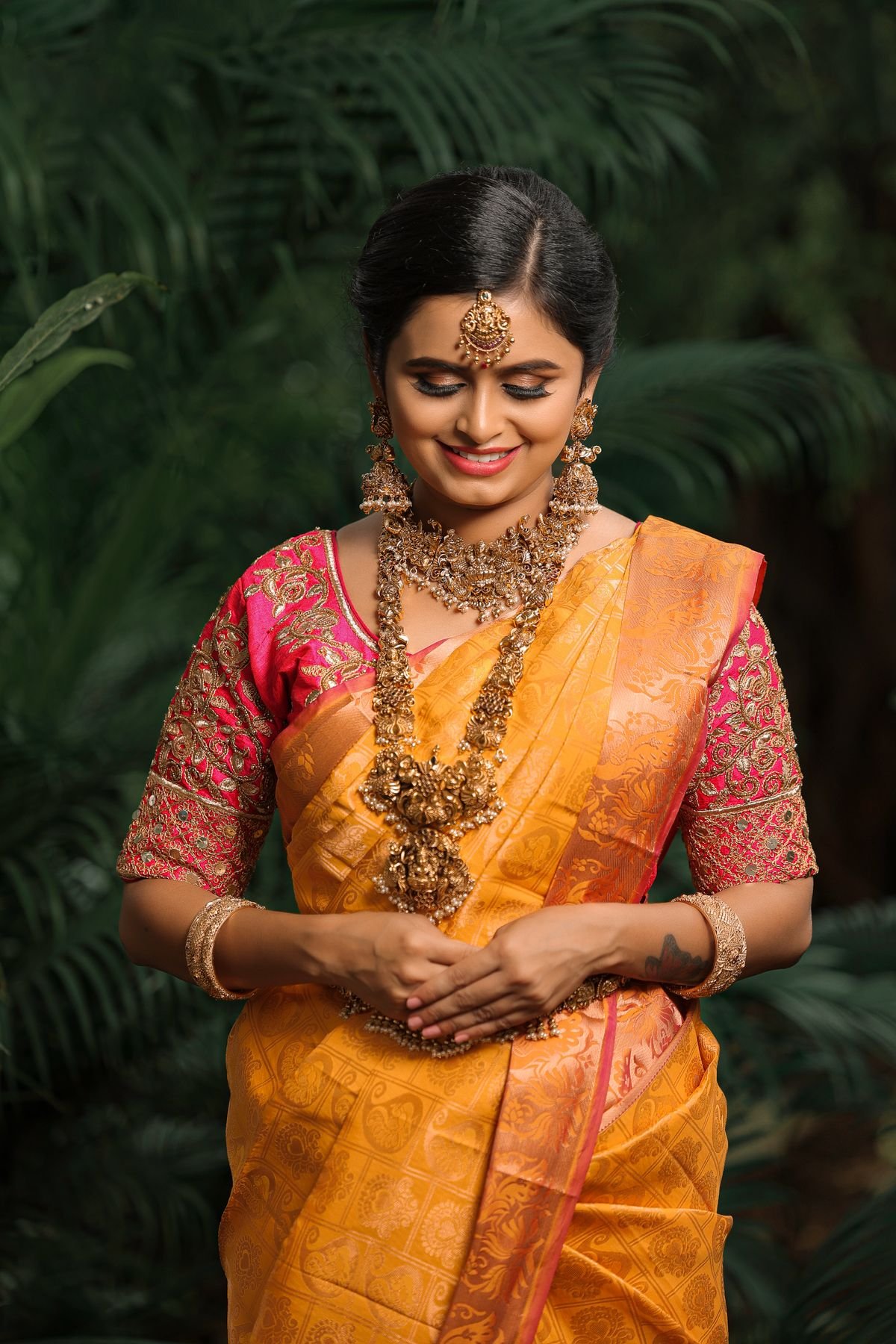
A mirror-work saree is made for evenings, for mehndi nights and for sangeet, when the light is low and a little sparkle goes a long way. Small mirrors, or shisha, are set into the embroidery at intervals across the body and along the border, each one ringed with bright thread in red, green, orange or gold. The mirrors catch the light as you move, so the saree seems to change with every step, and it needs no heavy jewellery at all to look festive. Mirror work has its roots in the embroidery of Sindh and Kutch, and on a saree it brings a folk energy that no other technique quite matches.
Check three things before you buy one. First, every mirror must be stitched firmly into its ring of thread, not glued, because glued mirrors fall off in the wash and leave a hole in the design. Second, the back of each mirror should be covered with a small piece of fabric or a neat knot, so the edges do not scratch the skin or snag the blouse. Third, the mirrors should be small. Large mirrors look impressive in a shop but they make the saree stiff and heavy, and they catch on everything. Worn with a plain velvet or silk blouse and a simple hairstyle, a mirror-work saree is one of the most striking festive pieces you can own.
6. Tilla and zari border saree on silk
For women who love the richness of metallic work but want a saree they can wear more than once, the tilla and zari border saree is the practical answer. The body of the saree stays comparatively plain, in silk, raw silk or tissue, while the border and the pallu carry dense gold or silver zari in paisleys, temple motifs and fine geometric bands. The contrast between the quiet body and the glowing border is what makes this design so elegant: it reads as formal from across the room, yet the saree stays light enough to wear comfortably for hours.
The fitting detail that matters most is the width and the fall of the border. A border that is too wide will make the saree look bottom-heavy and will fight with the pleats, while a border that is too narrow disappears once the saree is draped. Ask the shop to drape the saree fully, pleats and pallu, before you decide, because a border that looks perfect on the folded fabric can sit very differently once it is worn. The zari should also be tested for roughness: run the border across the inside of your wrist, and if it scratches, ask for a soft cotton facing behind it. This is the saree to choose for a formal dinner, a walima or a family wedding where you want to look dressed up without carrying a bridal weight all evening.
7. Chikankari saree in white and pastel tones
The chikankari saree is the quietest design on this list, and for many women it is the most elegant. Fine white-on-white or pastel threadwork, in the shadow-work tradition of Lucknow, is worked across a georgette or organza saree in delicate paisleys, small flowers and fine vines, with the occasional touch of silver thread or a single pearl. The effect is soft and luxurious: you notice the texture before you notice the pattern, and the saree looks expensive without shouting about it. It suits a daytime walima, a nikah or a formal lunch, where a loud saree would be wrong.
Because chikankari is fine and light, the embroidery must be equally fine, or it will pucker the fabric. Check the pallu carefully, because chikankari work is densest there and pallus are where cheap copies cut corners by leaving the pattern unfinished. A real chikankari saree feels light for its size, folds down small, and keeps its drape when worn, which is exactly why the technique has been treasured for generations. Pair it with a lightly embroidered blouse and simple pearl jewellery, and let the threadwork do all the talking, because it was made to. For a closer look at this white-on-white tradition, see our guide to chikankari embroidery designs.
8. Embroidered net saree with a heavy pallu
At the far end of the scale from chikankari sits the embroidered net saree, the boldest design on this list. A sheer net body, scattered with small bootis or sequins, is finished with a heavily embroidered pallu in velvet, raw silk or organza, worked in resham, zari and sequins. The contrast between the light, almost invisible body and the rich pallu is what makes this saree so dramatic: it reads like a piece of couture, graphic and unmistakably festive. It is the design most often chosen for walima nights and formal receptions, where the pallu is the whole point of the outfit.
The risk with a net saree is the handling. Net snags easily, so every edge of the embroidery must be finished cleanly, with no loose thread ends or rough knots that can catch the net and tear it. Ask to see the reverse side of the pallu, and run your hand across the join where the pallu meets the body: it should lie flat, with no puckering around the seam, and the colours should be colourfast. This design also gives you the most freedom with the blouse, because the saree already carries so much drama that the blouse can be plain, heavily worked or even a contrasting solid colour. It is the saree to choose when you want the outfit to be remembered, and it photographs beautifully, because the bold pallu reads clearly even from across the room.
How to choose the right saree embroidery design for your occasion
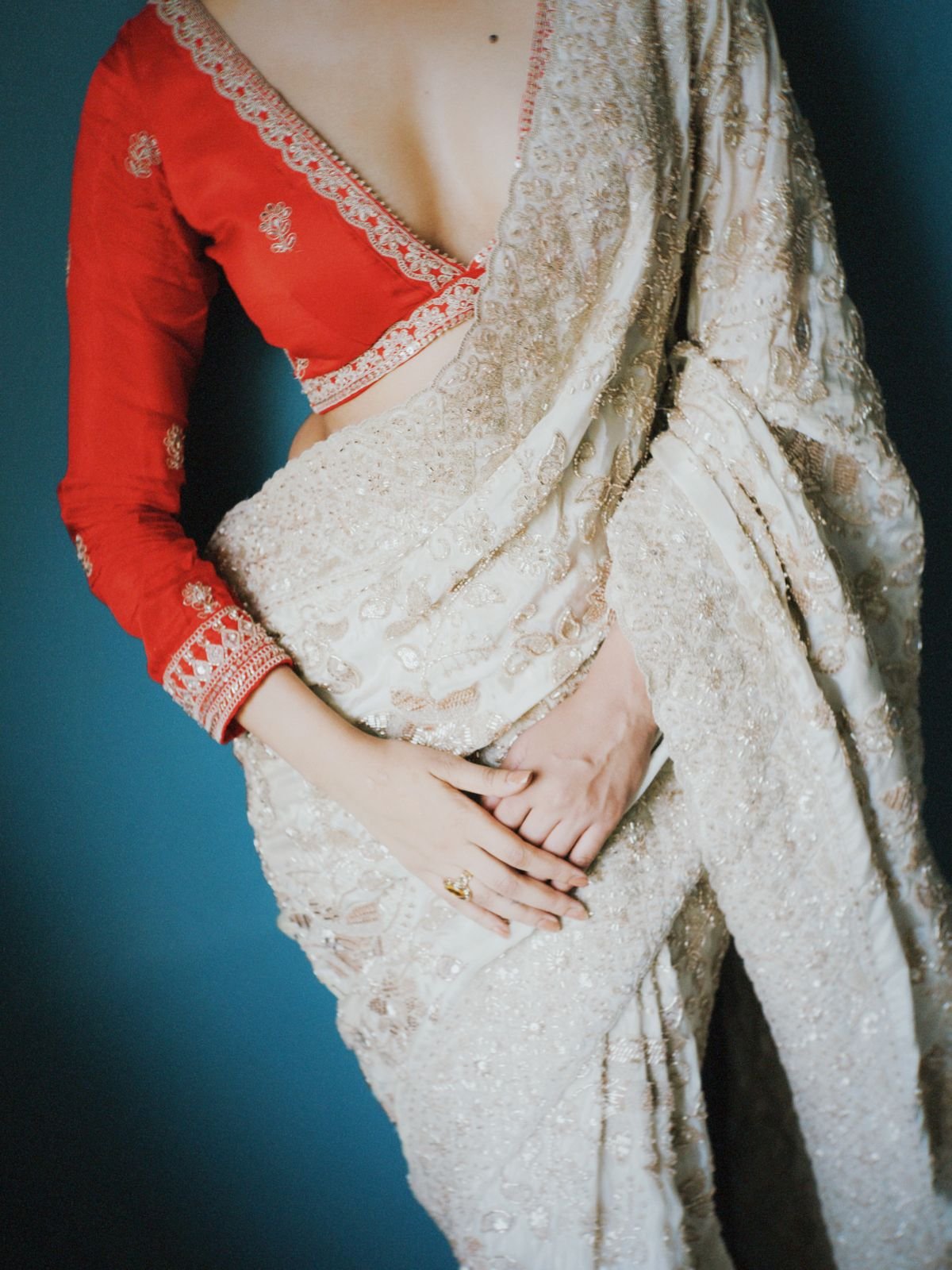
Start with the occasion rather than the design catalogue when you compare saree embroidery designs. A mehndi saree should be light, colourful and easy to dance in, which points you towards gota patti, mirror work or resham. A barat saree should be the most formal piece you own, which points you towards zardozi or a heavy tilla border. A walima saree sits between the two: glamorous but comfortable, which is where sequins, net and chikankari belong. A nikah saree should be soft and modest, which is where pastels and chikankari shine. Decide the occasion first, and the design will often choose itself.
Then decide by season. Summer weddings in May and June suit georgette, chiffon and organza sarees with light resham or gota work, because heavy silk and dense zardozi will be unbearable in the heat. Winter weddings suit silk, velvet borders and jamawar with tilla and zardozi, because the fabric keeps you warm and the metallic work looks richer in low winter light. Finally, match the design to the jewellery you already own. There is no sense paying for a pearl saree and then covering it with a heavy necklace; choose one of them to be the detail of the outfit, and let the other go. And remember that the blouse and the saree are one outfit, not two: if the pallu is the hero, everything else should step back.
Fabric and thread choices for saree embroidery
The saree is the longest garment most women will ever wear, so fabric and thread choices here are practical, not decorative. Georgette and chiffon need light thread, open designs and a stabiliser behind the work, or the saree will pucker and lose its fall. Silk and raw silk carry medium-density designs comfortably and are the safest base for most of the saree embroidery designs above. Velvet borders and jamawar carry the heaviest work, but they need a structured fall and a lining, because the fabric itself is already heavy before the embroidery begins. Organza and net need the embroidery worked on a frame with even tension, and the reverse finished neatly, because the back of the work shows through.
For thread, resham gives a soft sheen and washes well, which is why it dominates everyday and semi-formal sarees. Metallic tilla and zari look richer but can feel rough against the skin, so keep them on the border and the pallu rather than the pleats that touch the waist. Gota and sequins are light and bright, but they must be stitched, never glued. Whatever the thread, ask for a small stitched sample on your actual fabric and wash it once before the full piece is made. Thread that bleeds or puckers on the sample will do exactly the same on the finished saree, only then it will be too late to change. To understand which techniques suit hand work and which suit a machine, read our guide on machine vs hand embroidery.
What to check before buying or commissioning saree embroidery
Whether you are buying ready-made or sitting with a karigar, run the same checks. Look at the reverse side first: neat, short thread ends and a clean fall mean the work was finished properly, and they tell you more than the front does. Hold the saree up and look along its border; the border should be even all the way around, with no point where the embroidery pulls the fabric into a wave. Try the saree on with the blouse, drape the pallu as you will wear it, and walk, sit and turn. A saree that is comfortable only while standing still in front of a mirror is not finished.
For a custom order, agree the design on paper at full size before the fabric is cut. Mark the width of the border, the length of the embroidered pallu and the exact point where any motif ends, and keep a photograph of that drawing with the agreed price and delivery date. Ask which parts are hand work and which are machine work, and pay for each accordingly; both have their place, but they should never be priced as each other. A good maker will welcome these questions, because they protect him as much as they protect you.
How to care for embroidered sarees
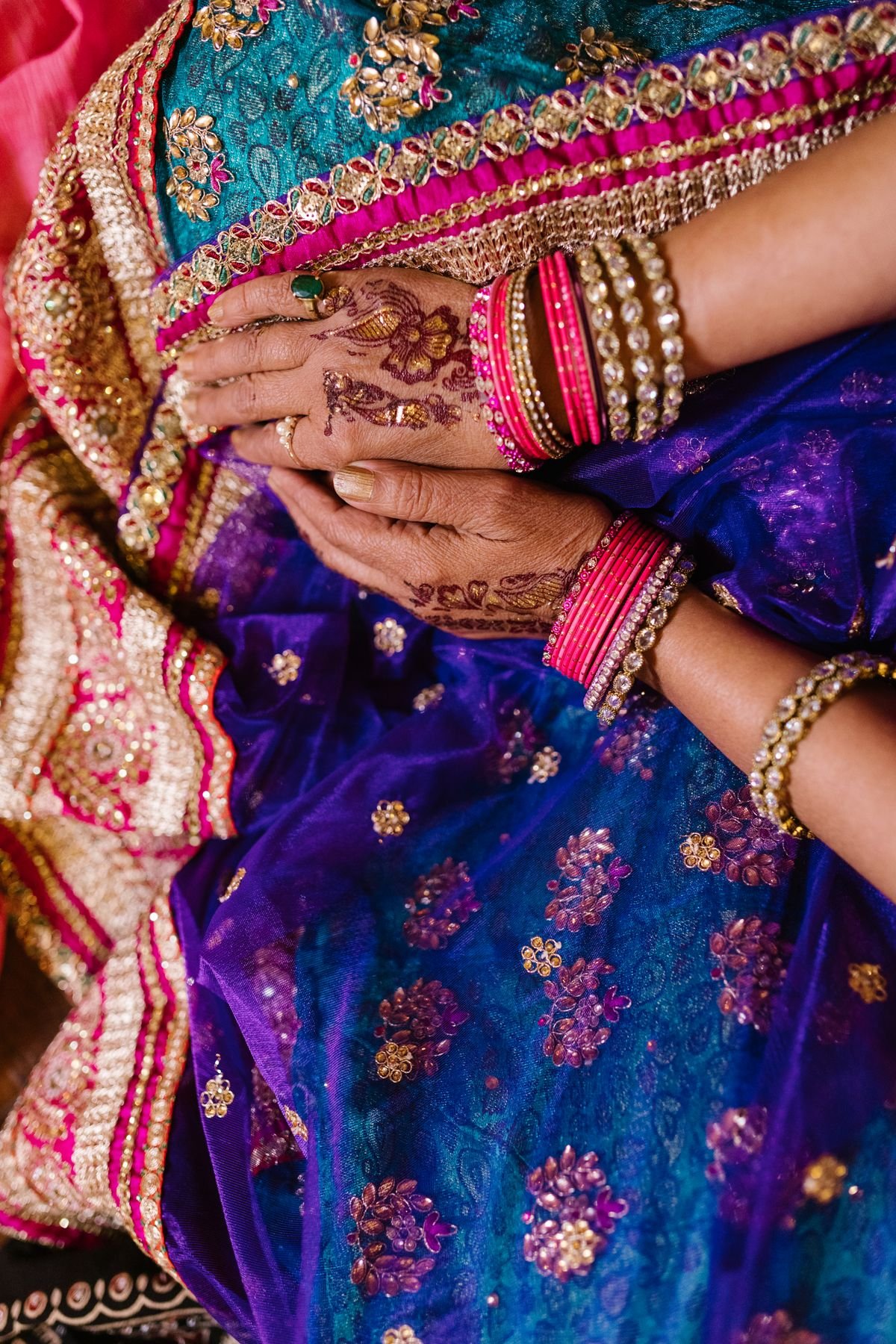
Most saree damage happens in storage and at the dry cleaner, not during wear. Never fold a heavily embroidered saree into a tight bundle, because a hard fold through dense zardozi or sequins can crack metallic thread and snap beads. Roll the saree loosely in a clean cotton cloth, or hang it on a wide, padded hanger with the pallu supported, so the embroidery keeps its shape. Keep sarees with pearls, sequins or metallic thread out of the washing machine altogether; gentle dry cleaning, or hand washing in cool water for light resham work, protects both the thread colour and the fabric around it.
Iron from the reverse side, over a soft cloth, and never press directly on raised work, pearls, sequins or gota. If a loop of thread lifts at the border, do not pull it and do not cut it short; take it to a tailor, who can draw it through to the back and secure it in minutes. Store the blouse and the saree separately, wrapped in muslin, with a small sachet of dried neem leaves or silica gel to keep moisture away. Ten minutes of this care after each wear is what keeps a good saree looking new for years.
Frequently asked questions
Which saree embroidery design is best for a barat?
A zardozi saree in deep red or maroon, or a tilla and zari border saree on silk for a winter barat. Both are formal, rich and made to be photographed, and both replace jewellery entirely, so the outfit needs nothing else to look complete.
Can saree embroidery be added to a ready-made saree?
Yes, in most cases. A tailor or karigar can add a border, motifs or a panel to an existing saree if the fabric is sound and there is access to the reverse side. Small motifs and border work are the easiest additions; a full zardozi pallu or a deep velvet border usually needs the saree to be opened and re-finished.
Which is better for a saree, hand embroidery or machine embroidery?
Hand embroidery gives softer texture and is easier to place precisely on a curved pallu, which is why it is preferred for bridal and formal sarees. Machine embroidery is consistent, quicker and more affordable, and works well for repeated geometric borders and everyday festive sarees. The right choice depends on the design, the fabric and your budget, not on one being universally better.
How much does saree embroidery cost in Pakistan?
It varies widely with the design, thread and city. A simple machine-embroidered resham or gota saree is usually the most affordable option, while hand-worked zardozi or tilla border sarees cost considerably more because of the hours involved. Always agree the full price, including fall and finishing, before work begins, and ask for a sample if the design is dense or metallic.