
An embroidered dupatta can set the direction for an entire festive outfit. A slim scalloped edge gives a plain kameez just enough detail for an Eid lunch, while wide antique-gold borders can carry a simple silk suit through an evening wedding. The same design can feel quite different depending on where the embroidery sits, how the fabric hangs and which side of the work is visible when you move. This 2026 guide brings together dupatta embroidery designs for Pakistani festive wear, with ideas you can take to a tailor or use while shopping for a ready-to-wear piece.
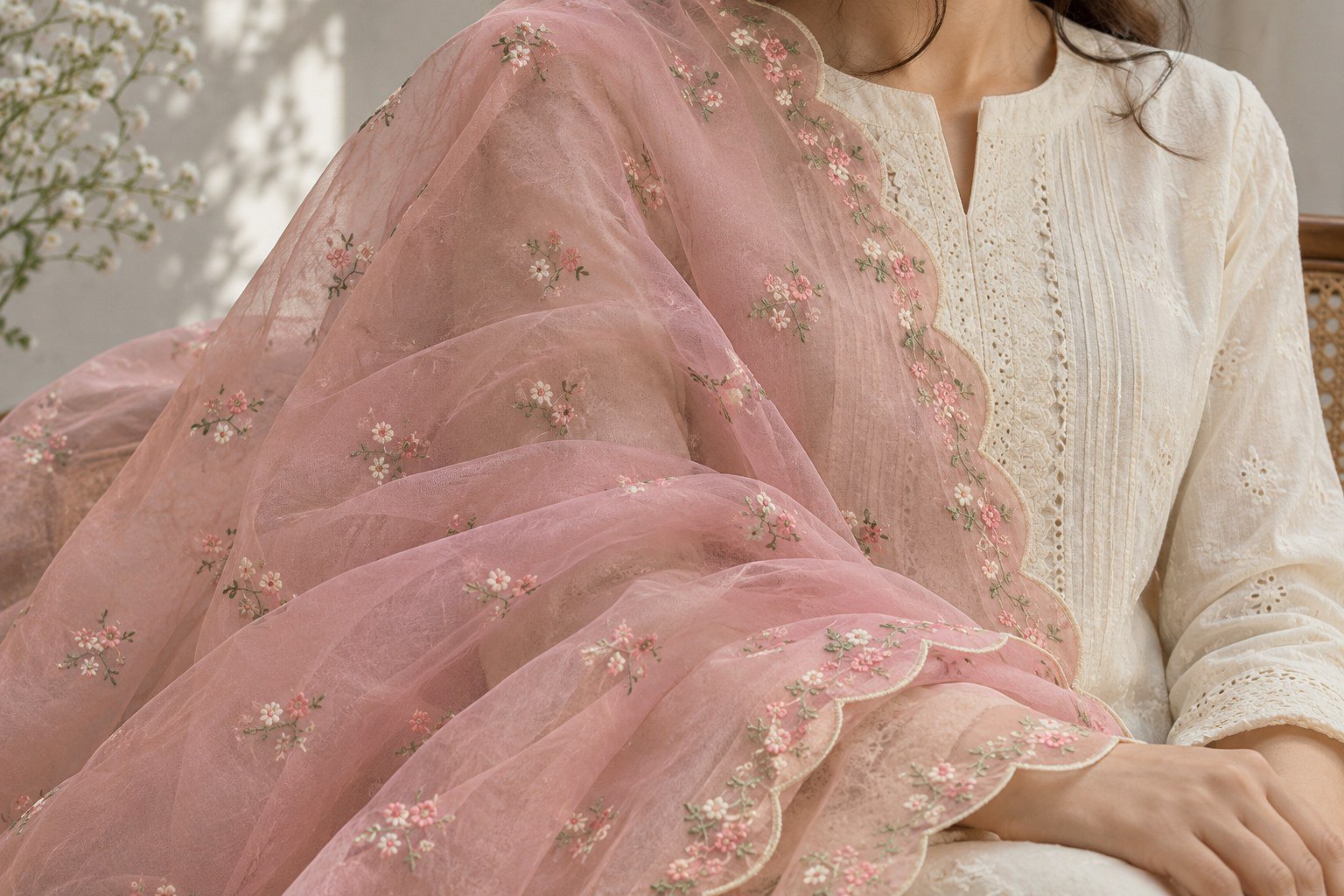
1. Scalloped organza with small floral sprays
Blush organza with softly curved scallops is a good starting point for a daytime outfit. Look for flowers with short stems and a little space between each motif so the embroidered edge stays legible against the sheer background. Pale green leaves and dusty rose petals look gentle over an ivory or pale pistachio kameez. If you want more definition in photographs, choose a slightly deeper outline thread for the scallops.
Try the dupatta over the fabric you plan to wear underneath. A pale motif that looks distinct against the shop counter may disappear over a cream shirt. Check the deepest part of each scallop for puckering and make sure the lining or facing follows the curves cleanly. For a simple one-shoulder drape, choose one long edge with a continuous border and ends with slightly fuller floral work.
2. Antique gold zari and gota on jewel tones
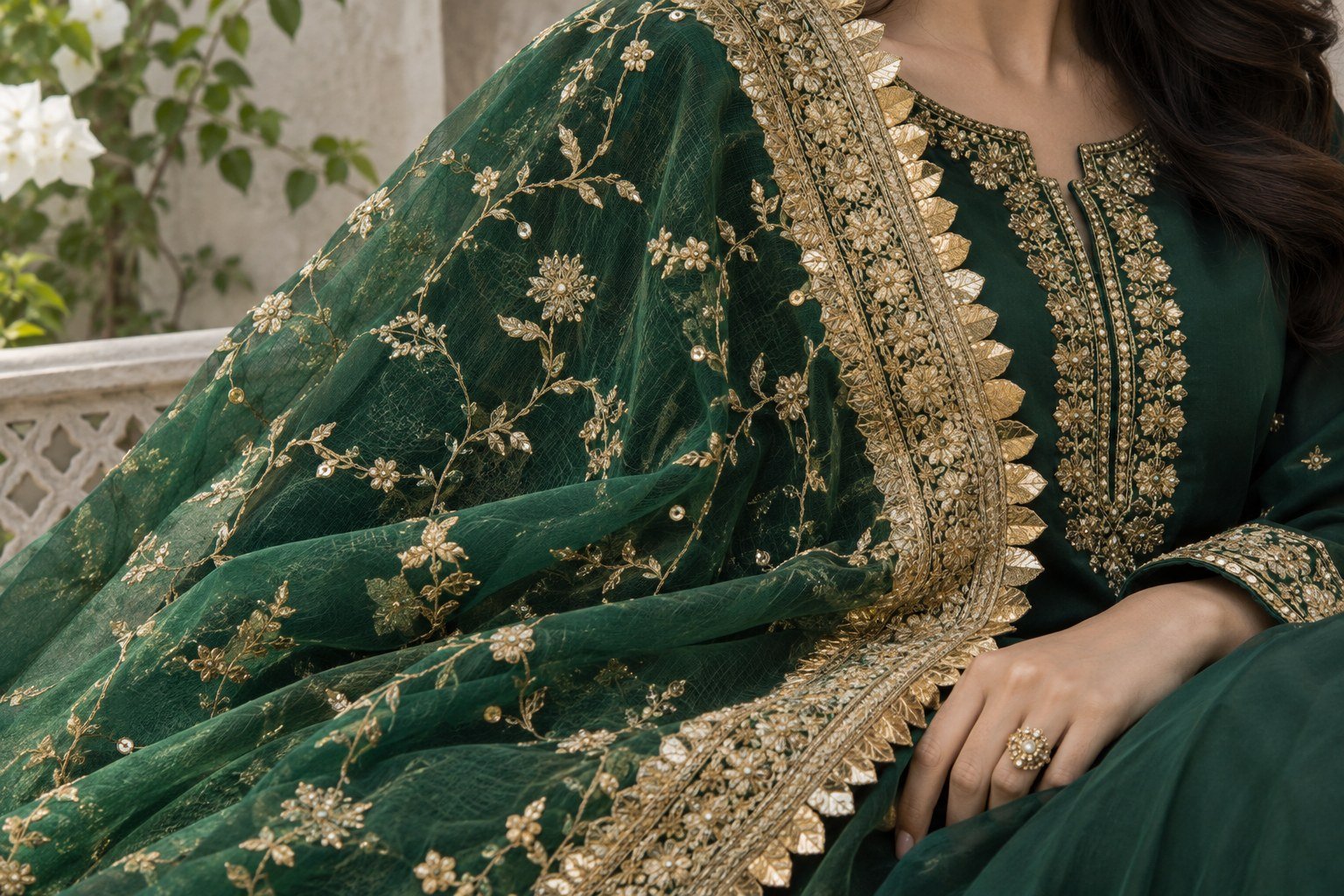
An emerald, aubergine or midnight-blue dupatta with antique gold details suits a nikah dinner, reception or family wedding. Zari gives the pattern a metallic thread sheen, while gota ribbon can define an outer edge or form individual leaf shapes. A narrow inner vine followed by a plain strip of fabric and a final ribbon edge is one way to give each texture room to show.
If the shirt is plain, a wide zari border can make the outfit feel complete. When the shirt already has a dense neckline, put the heaviest dupatta work at the short ends and leave the long edges more restrained. Lift the dupatta by a corner before you buy it. A border that pulls the fabric sharply down may need a stitched support or a different drape to stay comfortable through the evening.
3. Multicolor threadwork across an ivory base
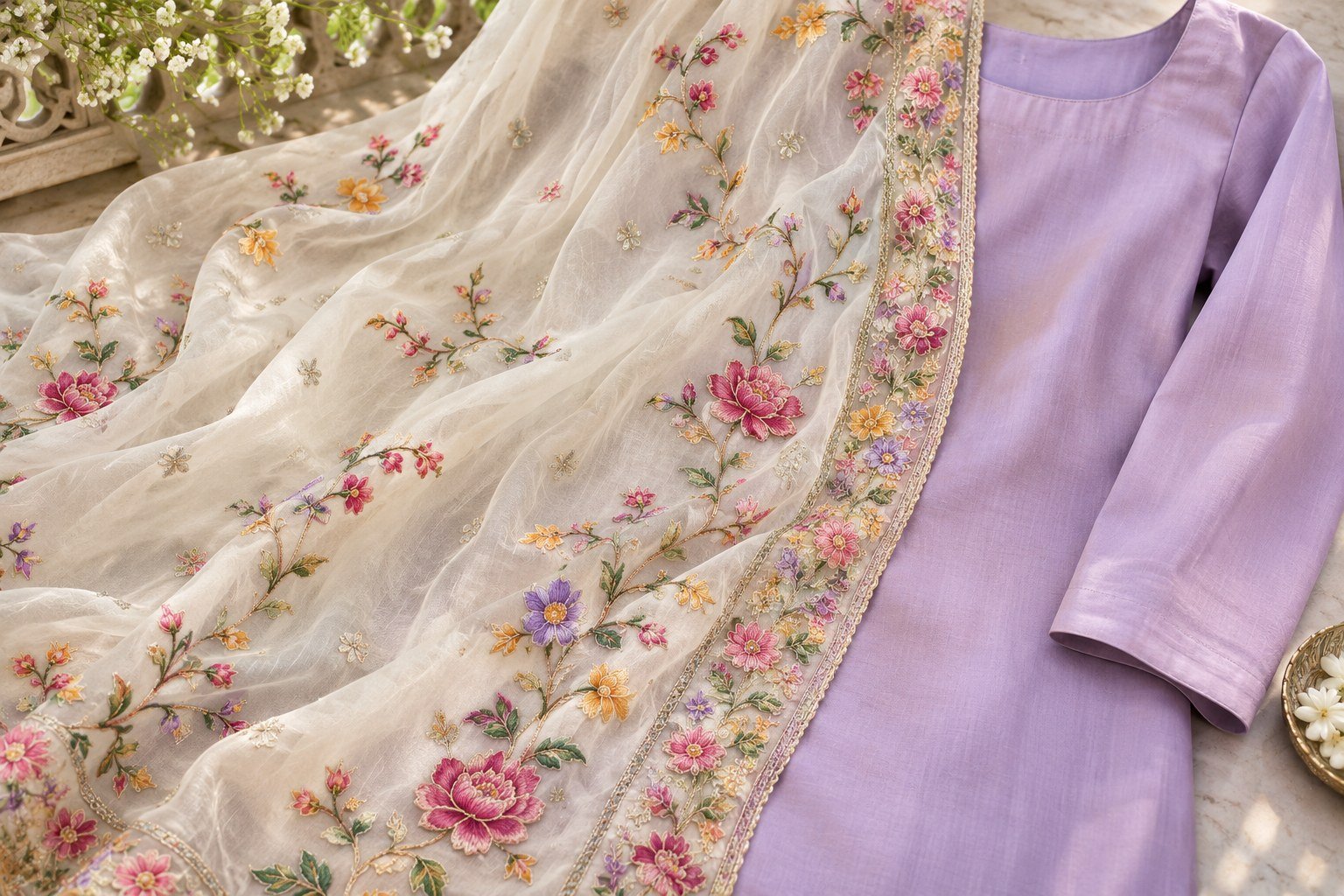
Multicolor embroidery is especially practical when you want one dupatta to work with several solid suits. An ivory base with lilac, leaf green, brick pink and a little ochre can pick up one color from a kurta without requiring an exact match across the whole outfit. An embroidered vine around the perimeter and small scattered motifs, often called bootis, give you pattern at the edge and across the fabric.
Ask for a quick sketch of the motif spacing before commissioning it. Large flowers distributed evenly over the entire fabric can crowd a small frame or compete with printed trousers. A useful layout places small blooms in the middle and saves the fuller sprays for two diagonal corners. With that arrangement, you can let one decorated corner fall forward while the other shows at the back.
4. Tone-on-tone embroidery for a soft formal look
Thread in the same color family as the base creates texture through stitch direction and shadow. A sage chiffon dupatta with slightly darker sage leaves is an easy match for tonal trousers and a matte kameez. Try plum with wine thread for a deeper evening palette. If the stitching also matches the cloth exactly, ask to view the piece in indirect daylight to see whether the raised portions are distinct.
This approach works well when the shape of the motif is simple. An almond-shaped leaf with a central vein reads more clearly than a large flower filled with several tiny details. For a dupatta that feels polished when folded, repeat one motif along the edge and let its size change at the corners. A thin piping finish will preserve the straightforward line of a rectangular drape.
5. Small mirrors on a geometric border
A line of small mirrors catches the light at a mehndi or dholki, particularly against mustard, teal and deep magenta. Diamonds, stepped squares and alternating rows of tiny dots make a strong border that pairs neatly with a solid or lightly printed suit. Choose a spacing that lets each mirror sit flat when the fabric curves around your forearm.
Handle the reverse to check that the securing stitches lie smooth and that any backing is neatly finished. Try the dupatta beside bangles, a beaded bag or a sequined sleeve before committing to that combination. If the pieces snag each other, keep the reflective details at the ends, where the fabric can hang free. A cotton silk base works for a defined shoulder pleat and usually shows geometric placement clearly.
6. Embroidered corners with an open center
Two well-placed corners can do most of the work when the fabric itself has a beautiful texture. Consider lotus buds in copper thread on rust silk or a cluster of cream jasmine on a navy ground. A slightly wider border at the short ends can frame these motifs and make the dupatta look intentional even when you wear it without pins.
Corner embroidery is a helpful option if you plan to wear necklaces or have a heavily embellished neckline. The center remains easy to wrap around the shoulders, with the stitched areas visible below. If ordering custom work, mark which corner you want to show at the front when the dupatta sits on your preferred shoulder. The direction of stems and hanging motifs should follow that intended drape.
7. Cutwork borders on a fabric with body
Cutwork adds little openings inside the stitched pattern, which makes flowers, arches or leaf shapes stand out against a contrasting garment. Medium-weight organza can hold a defined edge, and cotton blends can suit a daytime version with a compact geometric repeat. Pale blue cutwork over a deeper blue kameez gives the openings definition without introducing a new color.
Look closely at the fabric bridges that connect the openings. A narrow bridge with frayed edges can distort after repeated handling. Test a fold to see how the cutwork behaves across the shoulder, especially if the motif forms points that might catch on jewelry. If you expect to wash the outfit regularly, ask for the care instructions before buying and favor compact openings with clean, reinforced edges.
8. Phulkari-inspired blocks for festive color
A thread-heavy border inspired by phulkari can bring warm pink, orange and green to a plain kurta. Use visual references when speaking with a tailor and specify whether you want a geometric border with a similar color palette or a piece made using traditional phulkari methods. Those details affect how you describe the finished piece and what you may pay for the work.
Give a dense border some space at the outer edge, especially where the dupatta will be folded. Three bold colors are often enough when the base is already saturated. If a heavy full border feels stiff, reserve the larger blocks for the ends and use a smaller diamond along each long side. Wear it with a solid kurta for a dholki or with a lightly embroidered shirt for a longer family function.
Which fabric suits your dupatta design?
Choose your fabric with the embroidery and the occasion in mind. Organza holds sharp pleats and shows scalloped outlines well. Chiffon falls close to the body and works with light motifs that move along with the cloth. Net displays embroidery against an open background and can look formal over a smooth shirt. Silk blends and cotton silk offer more coverage and can give a geometric border a stable base.
Ask to see a stitched swatch if you are planning heavy work on sheer fabric. Hold it upright, fold it twice and look at the back. The swatch should show how much the cloth pulls around the stitches and how visible the backing will be under daylight. Compare the finished weight near both ends if you want a balanced drape. You can also ask the tailor to test a short section of border first and confirm the stitch density before finishing the entire piece.
How to style an embroidered dupatta for Eid and weddings
For Eid lunch, choose a soft palette and a drape you can adjust without leaving the table. A short front fall and a longer section at the back keep the edge away from food and drinks. With a plain ivory outfit, a scalloped blush dupatta looks finished alongside simple pearl earrings or a small pair of studs. For an outdoor evening dinner, deeper colors often make a lightly worked edge easier to see.
At a wedding, decide whether the dupatta will cover your head or sit on a shoulder. For head covering, check that the upper edge rests comfortably at the hairline and that stones or rough ribbon do not sit against the face. At a reception, place a wider border over one shoulder and let a decorated end show from the elbow. With an embellished bodice, shift the drape slightly outward so the neckline remains visible.
Photograph the outfit from the front and back before the event. A border that looks even in the mirror may twist when you stand naturally or lift a handbag. Place any pin through a reinforced seam or a sturdy fold when possible. Bring the dupatta to the fitting so the tailor can check how its edge sits next to your sleeve work, neckline and trouser hem.
What to check when buying or ordering custom embroidery
Start with the finished dimensions and fold the fabric to the width you expect to wear. A wide dupatta can give good coverage, but several folds may hide half of a broad embroidered pattern. If you are ordering online, ask for daylight photos of the overall piece, a close-up of the border and an image of the reverse. Those views help you judge motif scale, stitch finish and how sheer the cloth is.
For custom work, confirm the base fabric, exact thread colors and which edges will be embroidered. Agree on a sample motif and decide where corner motifs will start in relation to the hem. Ask whether the quote covers fabric, embroidery, edge finishing and any added lining or facing. If the dupatta is for a scheduled function, build in time to check the completed piece and make small repairs before the event.
At pickup, spread out the dupatta completely. Check that the border is straight when laid flat and that mirror frames, gota ends and tassels are secure. Make sure matching corners sit at the same distance from both sides. Lightly run your fingers over areas that will touch your neck or hair. Save a photo of the finished embroidery in case a repair is needed later.
How to care for embroidered dupattas
Follow the care label or ask the maker how to handle the specific fabric, dyes and embellishments. A dupatta combining silk, metallic trim and glued details may need different care from a cotton piece with colorfast thread. If the care instructions allow an iron, work from the reverse with a pressing cloth and avoid pressure on raised embroidery, mirrors and sequins.
Store the fabric clean and dry, with folds placed between heavily stitched sections whenever possible. Loosely fold delicate areas around plain acid-free tissue if you plan to store a formal dupatta for a while. Give metal trims and mirrors space away from sheer pieces they could snag. Before wearing a stored dupatta, unfold it and look for loose threads or damaged corners so you have time to get them repaired.
Frequently asked questions
Which embroidery looks best with a plain suit? A multicolor floral border gives a solid suit an easy color reference for shoes or accessories. For a formal evening, antique zari over a deep color offers a more pronounced edge. Let one color in the border echo the kameez or trousers.
How can I coordinate a dupatta with an embroidered kameez? Pick up one thread color or repeat a small motif from the shirt. A neckline with dense work pairs neatly with an open dupatta center and detailed corners. Spread both pieces together before deciding where the border will fall.
Can I wear the same dupatta to Eid and a wedding? Yes. An organza dupatta with a medium floral border can work with a plain cotton silk suit during the day and a deeper satin or silk blend in the evening. Use a shorter shoulder drape for lunch and a longer front fall to show the border at a wedding.
What makes a dupatta easier to keep in place? A fabric with a little grip, a moderate border weight and a balanced drape all help. Try it with the actual outfit, since a smooth shoulder fabric can let even a structured dupatta slip. If you use a pin, put it through a reinforced part of the fabric and check that it closes securely.
3 thoughts on “Latest Dupatta Embroidery Designs 2026 for Festive Fashion”