You have seen it happen, perhaps to yourself. A kurta is sold as hand-embroidered at a hand-embroidery price, and six months later the work looks flat, identical and slightly too perfect — because it was machine work all along. Or the opposite: a bride waits eight weeks for a hand-worked bridal dupatta, only to discover that a machine could have produced the same geometric border in a day for a fraction of the price, leaving the budget free for the hand work that actually mattered, like the zardozi on the neckline. The mistake in both cases is the same. The embroidery was chosen by habit or by price tag, not by what each method actually does best.
That is why the machine vs hand embroidery question deserves a proper answer before you commission anything in 2026. Neither method is better in every situation. Machine embroidery is precise, repeatable and fast; hand embroidery is soft, individual and capable of textures no machine can copy. The right choice depends on the design, the fabric, the occasion, the time you have and the money you are willing to spend. This guide compares the two methods across the eight things that actually decide the result — how they are made, how they look, how long they last, what they cost, how fast they are, which fabrics suit them, which occasions suit them, and how to tell them apart when you buy — so you can walk into a tailor’s shop or a boutique knowing exactly what you are paying for.
What is machine embroidery, and what is hand embroidery?
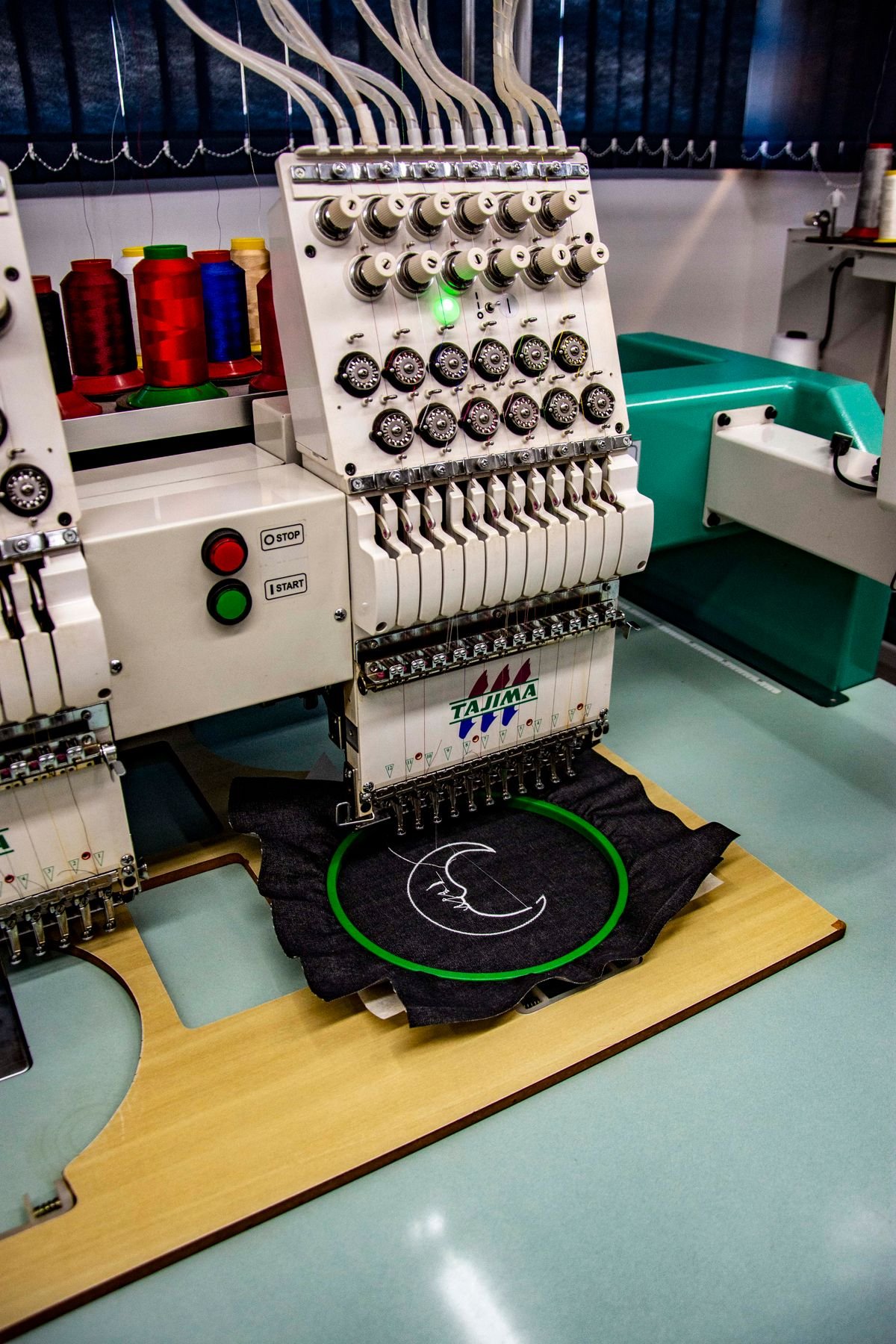
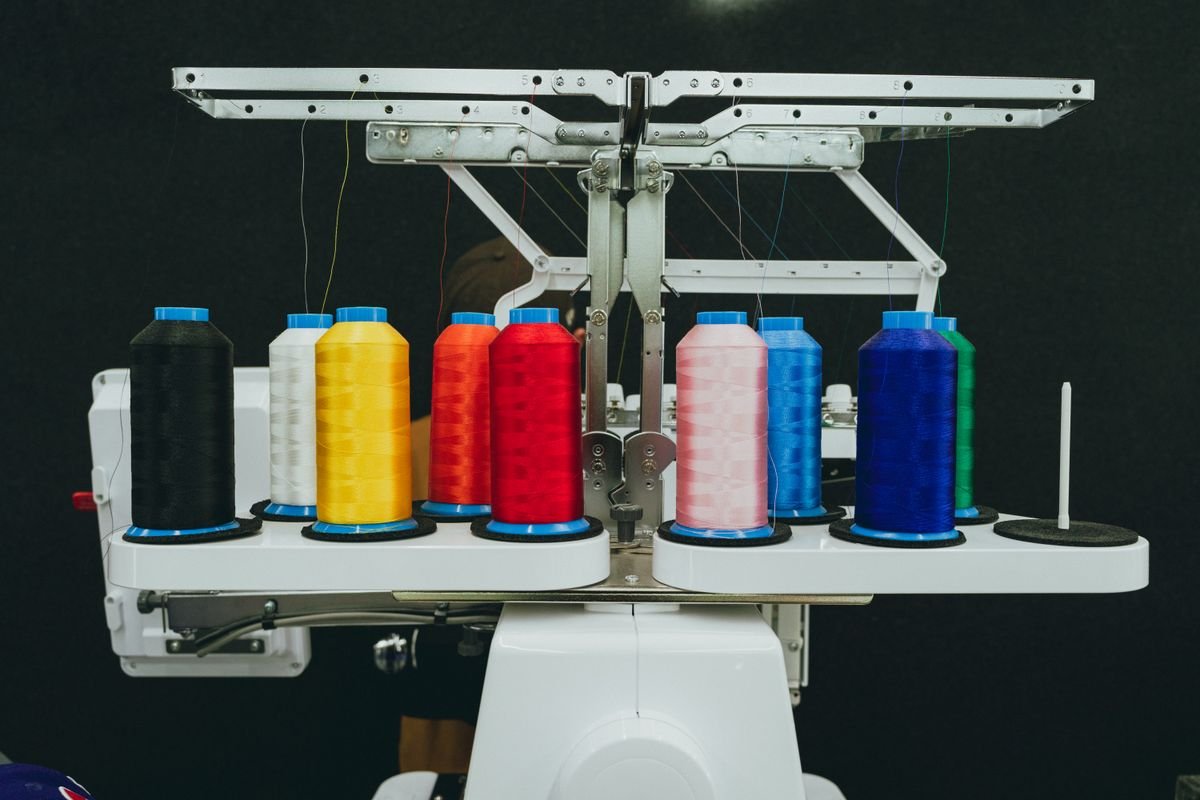
Machine embroidery is stitching produced by a computerised embroidery machine. The design is first digitised — drawn as a digital stitch file — and the machine then follows that file, moving the fabric under one or more needle heads while thread is fed from spools above. A single-head machine works on one piece at a time; a multi-head industrial machine, like the Tajima machines used in many Pakistani workshops, can stitch the same design on several garments at once, in exactly the same way, every time. The operator still matters — setting the tension, hooping the fabric and choosing the thread — but the stitches themselves are made by the machine.
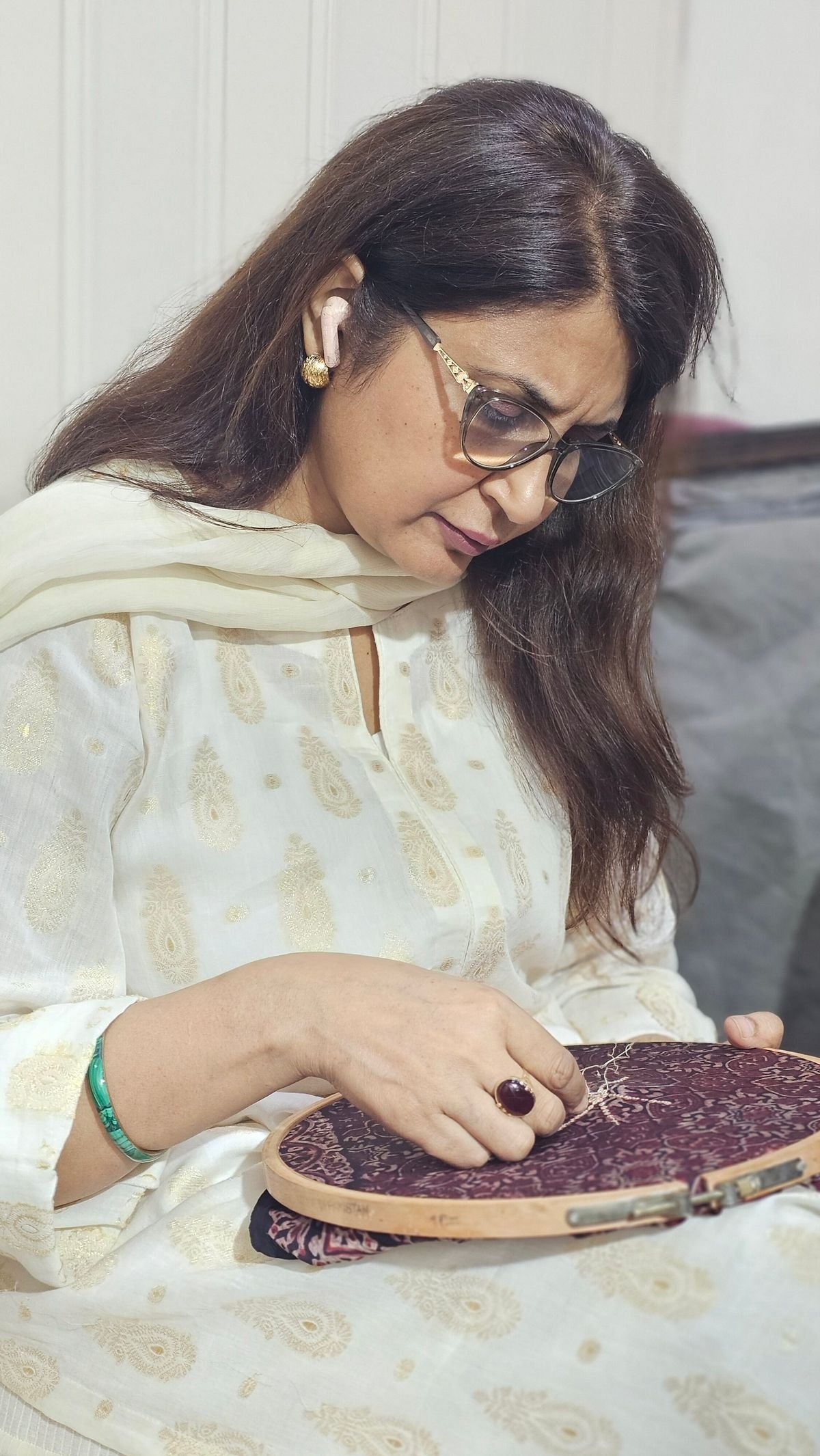
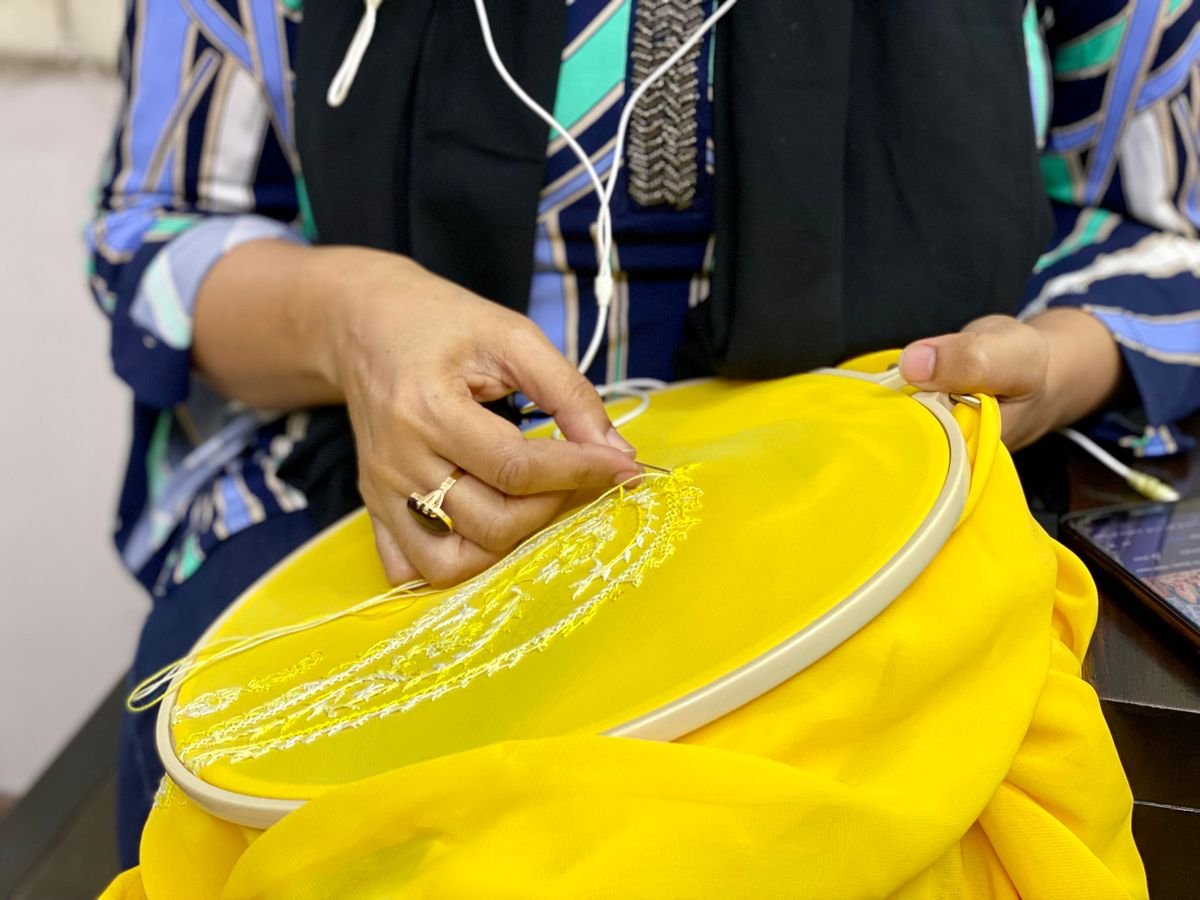
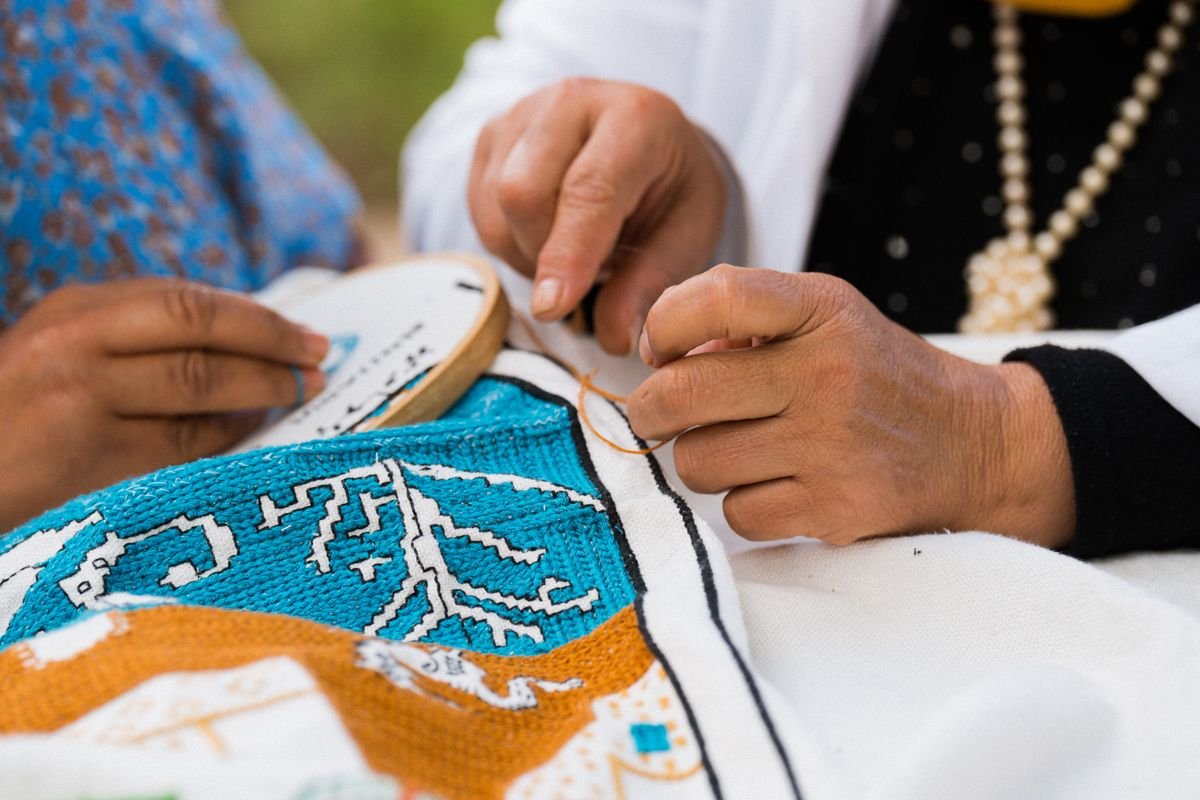
Hand embroidery is stitching made stitch by stitch with a needle held in the hand, usually with the fabric stretched tight in a wooden hoop or on a wooden frame called an adda. The karigar follows a traced design, but every stitch is placed by eye and by hand, so no two flowers, leaves or motifs are ever perfectly identical. Techniques like chikankari, phulkari, zardozi, dabka and naqshi are all hand embroidery traditions, and they survive because the hand can do things a machine cannot: raise a stitch off the surface, vary the tension within a single petal, or couch a piece of metal wire exactly where the design needs weight. That difference — programmed precision against the judgement of a hand — is the heart of the machine vs hand embroidery comparison, and it shapes every point that follows. If you are new to the stitches themselves, our guide to hand embroidery stitches for beginners explains the basic stitches a karigar uses before any of these techniques begin.
1. How each one is made
The making process is where the two methods differ most, and understanding it explains almost everything else. Machine embroidery begins on a computer. A digitiser converts the artwork into a stitch file, deciding the stitch type, direction, density and order for every part of the design. That file is then loaded into the machine, the fabric is hooped, and the machine stitches at hundreds of stitches per minute. Once the file exists, the tenth piece looks exactly like the first, which is why machine embroidery dominates ready-made kurtas, uniforms and any design that must be repeated across sizes.
Hand embroidery begins with a design traced or stamped onto the fabric, and then a karigar works it stitch by stitch, often sitting at an adda for hours at a time. A single floral motif that a machine finishes in minutes can take a skilled hand several hours, and a dense bridal border can take days or weeks. The work is slower, but the hand can adjust as it goes: a stitch can be made slightly longer to follow a curve, a thread can be doubled where the design needs depth, and a mistake can be unpicked and reworked without re-running a programme. That flexibility is exactly what makes hand embroidery irreplaceable for one-off bridal pieces and for designs that must follow the shape of a particular garment.
2. Look and texture on the finished outfit
Put a machine-embroidered kurta next to a hand-embroidered one and the difference is visible within seconds, even to an untrained eye. Machine embroidery is even, dense and flat. The satin stitches lie in perfect parallel rows, the fill is uniform, and every repeat of a motif is identical. That precision looks wonderful on geometric borders, repeated bootis, logos and lettering, where regularity is the whole point of the design. It also photographs beautifully, because the even surface catches light the same way across the whole piece.
Hand embroidery looks softer and more alive. The stitches have slight variations in length and direction, the surface has gentle ridges and shadows, and the thread sits a little proud of the fabric instead of lying flat against it. A hand-worked flower has depth: the petals curve, the centre is raised, and the shading changes as you move around it. This is why hand embroidery suits organic designs — flowers, paisleys, vines and shaded petals — far better than machine work does. That softness is the first thing most people notice in a machine vs hand embroidery comparison, and it is the reason hand work still leads on bridal wear. It is also why a hand-embroidered chikankari kurta, with its shadow work and fine white-on-white texture, looks so different from a machine copy, even when the pattern is the same. For a closer look at that tradition, see our guide to chikankari embroidery designs.
3. Durability: which one survives the wash
Durability is the question most women ask second, and the answer surprises many of them. Well-made machine embroidery is usually the tougher of the two. The stitches are locked in by the machine at consistent tension, the thread is often a strong polyester that resists fading and breaking, and the back of the work is neat and evenly secured. A machine-embroidered border on an everyday lawn kurta will normally survive dozens of machine washes with little change, provided the fabric itself holds up. That is one reason brands rely on machine embroidery for ready-made suits that will be washed weekly.
Hand embroidery can be just as durable, but it depends far more on the skill of the maker and the care of the wearer. A well-finished hand piece, with short thread ends and a clean facing on the reverse, will last for years. A careless one will not: long floats of thread on the back catch and pull, loose knots unravel in the wash, and delicate threads like silk floss or metallic zari can snap if the garment is wrung or machine-washed. Hand embroidery also tends to use finer, more delicate threads — resham, silk, dabka and kora — which look richer but ask for gentler treatment. The honest rule is this: machine embroidery forgives rough washing, while hand embroidery rewards gentle washing, and the care section at the end of this guide covers both.
4. Cost: what you are really paying for
The price difference between the two methods is large, and it comes from labour, not from thread. Machine embroidery costs mostly for the digitising and the machine time. Once the design file exists, each additional piece is cheap, because the machine does the work in minutes. That is why a machine-embroidered kurta in a ready-made collection can cost only a little more than a plain one, and why boutiques can offer matching embroidered sets for a whole family at a reasonable price. The one cost that does not fall is the first piece: a complex design that needs careful digitising will carry a setup charge, which is why small custom machine orders can seem surprisingly expensive.
Hand embroidery costs for hours. A karigar is paid for the time the needle is in the fabric, and a dense design on a bridal dupatta can represent days of skilled work. That is why genuine hand-embroidered bridal wear costs several times more than a machine-embroidered equivalent, and why the price rises steeply with density: every extra flower, every extra row of dabka, is another hour of someone’s working day. When a seller offers you “hand embroidery” at a machine price, the arithmetic should make you suspicious, because no karigar can work for nothing. Always ask which parts of a piece are hand work and which are machine work, and expect to pay for each accordingly; both have their place, but they should never be priced as each other.
5. Speed and turnaround time
If you need an outfit quickly, the two methods are not in the same league. A machine can finish a full kurta panel — neckline, sleeves and daman — in under an hour of stitching time, and a workshop with several machines can complete a small order in a day or two. That speed is why machine embroidery is the only realistic choice for urgent orders, for matching sets needed for a family event next week, and for boutiques that must restock a popular design before it sells out.
Hand embroidery cannot be hurried without damaging the result. A single karigar working on a bridal dupatta may need one to three weeks, and a full bridal outfit with hand-worked zardozi can take a month or more, especially during the wedding season when the best karigars are booked in advance. Rushing hand work produces loose stitches, uneven spacing and tired hands, all of which show in the finished piece. If your event is more than a month away and the design deserves hand work, order early and agree the delivery date in writing. If your event is next week, choose machine embroidery honestly, and spend the money you save on a better fabric or a better fit instead.
6. Which fabrics suit each method
Fabric is the quiet decider in this comparison, because each method asks something different of the cloth underneath it. Machine embroidery needs a stable fabric that can be hooped tightly and held flat while the needle moves at speed. Cambric, cotton silk, khaddar, linen and medium-weight lawn all behave well under a machine, and the even tension keeps the stitches neat. Very light lawn and voile can pucker under dense machine work unless a stabiliser is used behind the fabric, and slippery fabrics like chiffon and organza need careful hooping and a lighter stitch density, or the design will distort.
Hand embroidery is kinder to delicate fabrics, because the hand can feel the fabric and adjust the tension stitch by stitch. Chiffon, organza, net and fine muslin — the fabrics that fight a machine — are the natural home of hand embroidery, which is why chikankari, shadow work and fine white-on-white embroidery have always been done by hand on light, airy cloth. Hand work also suits heavy fabrics like velvet and raw silk, where the karigar can couch thick dabka and kora wire that a machine needle could never carry. The rule is simple: if the fabric is delicate, sheer or very heavy, the hand is usually the safer choice; if it is stable and medium-weight, the machine will do it beautifully.
7. Which occasions suit each method
Occasion is where the comparison turns practical, because the right method is the one that matches how the outfit will actually be worn. Machine embroidery suits everyday and semi-formal wear best: office kurtas, university outfits, daily lawn suits and children’s clothes, where the embroidery must survive frequent washing, look neat every time and cost little enough to replace. It also suits matching family sets for Eid or a mehndi, where the same design must appear identically on several outfits and nobody will examine the stitches up close.
Hand embroidery suits the occasions where the outfit itself is the event: a nikah, a barat, a walima, a formal dinner or a festive Eid outfit that will be photographed all evening. On those occasions the softness, depth and individuality of hand work are visible and valued, and the extra cost buys something a machine cannot copy — the knowledge that no other outfit in the room carries exactly the same stitches. Many experienced women split the difference: machine embroidery for the borders and repeated motifs, and hand embroidery for the neckline or the centrepiece motif, so the eye goes to the hand work and the budget goes where it shows most.
8. How to tell them apart when you buy
This is the skill that protects your money, and it takes less than a minute once you know what to look for. First, turn the garment over and look at the reverse side. Machine embroidery has a neat, even back with uniform thread ends, often with a stabiliser sheet still visible behind the design. Hand embroidery has a more irregular back, with knots, thread ends of different lengths and no stabiliser, because the hand does not need one. Second, compare two identical motifs on the same garment. If they are perfectly identical, down to the last stitch, the work is machine-made; hand work always shows tiny differences between repeats.
Third, look at the texture. Machine satin stitch lies flat and smooth, like a ribbon pressed onto the fabric. Hand stitches stand slightly proud, with visible ridges and a soft, uneven surface. Fourth, check the edges of the design: machine embroidery has clean, sharp outlines, while hand work has a slightly softer, more organic edge. Finally, trust the price and the story together. If the seller says a dense, full-front design is hand work but the price is barely above a plain kurta, ask to see the karigar’s work in progress or a photograph of the adda it was made on. A genuine maker will be proud to show you; a seller passing off machine work as hand work will change the subject.
Fabric and thread choices for machine and hand embroidery
The thread you choose matters as much as the method, because thread is what the eye actually sees. For machine embroidery, polyester thread is the workhorse: it is strong, colour-fast and available in hundreds of shades, and it survives machine washing without fading. Rayon thread gives a softer sheen and a more silk-like look, but it is weaker and fades faster, so it suits occasion wear rather than everyday kurtas. Metallic machine thread exists, but it is harder to run and can break or shred if the tension is wrong, so ask for a sample before approving a large metallic design.
For hand embroidery, resham — silk floss — is the classic choice: soft, with a gentle sheen, and it washes well in cool water. Cotton floss is matte and sturdy, good for everyday hand work on lawn and khaddar. For festive and bridal work, the threads become materials in themselves: dabka (coiled wire), kora (flat metal strip), naqshi (fine metal thread), sequins and pearls, all couched or stitched by hand onto silk, velvet or tissue. Whatever the method, ask for a small stitched sample on your actual fabric and wash it once before the full piece is made. Thread that bleeds or puckers on the sample will do exactly the same on the finished garment, only then it will be too late to change.
What to check before buying or commissioning embroidery
Whether you are buying ready-made or sitting with a karigar, run the same checks. Look at the reverse side first: neat, short thread ends and a clean finish tell you more than the front does, for both machine and hand work. Hold the embroidered area up and look along its edge; the fabric should lie flat, with no puckering around dense stitching and no point where the embroidery pulls the cloth into a wave. Try the outfit on and raise your arms, turn your head and sit down. Embroidery that is comfortable only while standing still in front of a mirror is not finished.
For a custom order, agree the design on paper at full size before the fabric is cut, and write down whether each part is hand work or machine work, with the price for each. Mark the depth of the neckline, the width of any border and the exact point where any panel or motif ends, and keep a photograph of that drawing with the agreed price and delivery date. For hand work, agree the number of karigars and the weekly progress you will be shown; for machine work, ask to see the digitised sample stitched on your fabric before the full run begins. A good maker will welcome these questions, because they protect him as much as they protect you, and they are the reason our neckline embroidery designs guide recommends the same written agreement for every neckline.
How to care for machine and hand embroidery
Most embroidery damage happens in the wash and at the ironing board, not during wear, and the two methods need slightly different care. Machine-embroidered everyday kurtas can usually go into the machine on a gentle cycle, turned inside out, in cool water with a mild detergent. Keep them out of the dryer if you can; line drying protects both the thread and the fabric. Iron from the reverse side, over a soft cloth, and never press directly on raised stitching.
Hand-embroidered pieces need gentler treatment. Turn the garment inside out and hand wash in cool water, without wringing; press the water out flat between towels, then dry on a hanger so the embroidery keeps its shape. Keep hand pieces with pearls, sequins, dabka or metallic thread out of the machine altogether unless the care label says otherwise, and dry-clean bridal pieces rather than washing them at home. If a loop of thread lifts, do not pull it and do not cut it short; take it to a tailor, who can draw it through to the back and secure it in minutes. Ten minutes of this care after each wear is what keeps good embroidery — machine or hand — looking new for years.
Frequently asked questions
Which is better, machine embroidery or hand embroidery? In any machine vs hand embroidery comparison, neither method is better in every situation. Machine embroidery is better for repeated designs, everyday wear, tight deadlines and tight budgets, because it is precise, durable and fast. Hand embroidery is better for bridal and formal wear, delicate fabrics and designs where softness, depth and individuality matter. The right choice depends on the design, the fabric, the occasion and your budget, not on one method being universally superior.
Is hand embroidery worth the extra cost? Yes, when the embroidery is the point of the outfit — a bridal dupatta, a formal neckline, a festive kameez that will be photographed all evening. The extra cost buys texture, depth and individuality that a machine cannot copy. For everyday kurtas and repeated borders, the extra cost buys little that anyone will notice, and machine embroidery is the wiser spend.
Can you mix machine and hand embroidery on one outfit? Yes, and experienced makers do it often. A common combination is machine embroidery for the borders and repeated motifs, with hand embroidery for the neckline or the centrepiece motif, so the eye goes to the hand work and the budget goes where it shows most. Just agree in advance which parts are which, so you are charged fairly for both.
How can I tell if embroidery is really handmade? Check the reverse side, compare two identical motifs for tiny differences, and feel the texture — hand stitches stand slightly proud of the fabric, while machine satin stitch lies flat and even. Also trust the price: genuine dense hand work cannot be sold at a machine price, because the hours behind it have to be paid for.