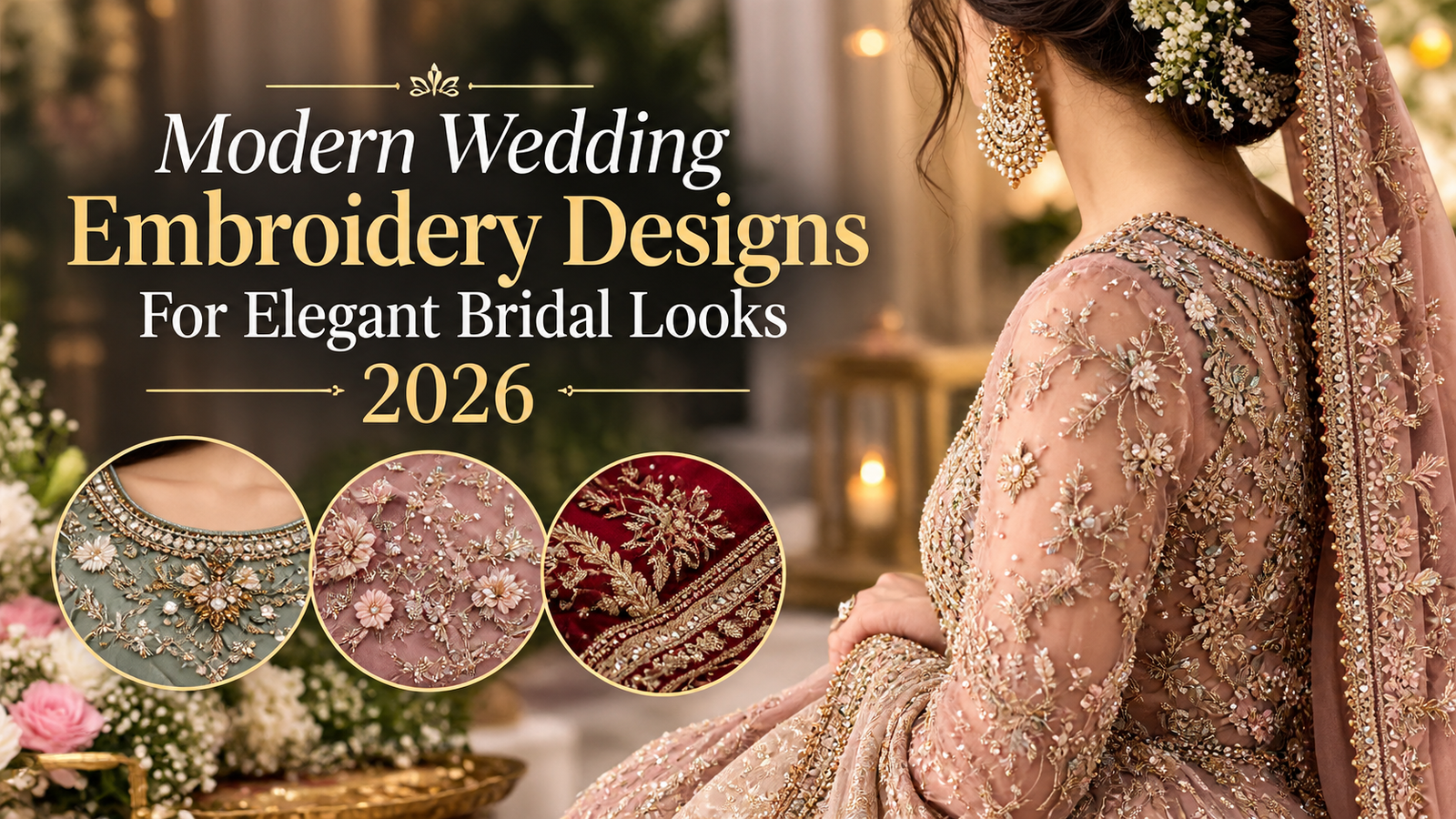
Modern Wedding Embroidery Designs For Elegant Bridal Looks 2026: The Pakistani Bride’s Three-Level Guide
A bridal jora rarely goes wrong because of its colour. It goes wrong in the embroidery, and usually for the same reason. The bride chose the design while looking at a hanger in the bright shop light, and never pictured it on a hot stage, under a camera flash, with a dupatta on her head for the six hours.
That gap between the shop and the stage is where most regret starts. The good news is that it’s very easy to close once you know what to the look for.
In short, Modern Wedding Embroidery Designs for a Elegant Bridal Looks 2026 are about placement, finish and comfort rather than sheer quantity of kaam. The most elegant joras this season keep the heaviest work in one or two zones and the use softer metallics. They add raised texture so the embroidery survives the camera, and include one personal full detail that makes the outfit unmistakably yours.
How you get there depends on the how you’re buying. Some brides pick a ready-to-wear jora off the rack. Some take a designer piece and change it. Some sit down with a karigar and build one from a blank sheet of fabric. Each path has its own decisions, so this guide is split into three levels. Read the one that matches you, or read all three if you haven’t decided yet.
What Modern Wedding Embroidery Designs For Elegant Bridal Looks 2026 Actually Mean
Walk through any bridal bazaar and you’ll see two styles pulling against each other. One is the old heavy style: gold from neck to hem, every inch filled. The other is a quieter, more considered look, where the fabric is allowed to show and the embroidery is placed with intention.
The 2026 bride sits closer to the second style without giving up the richness Pakistani weddings are known for. Barat reds are moving towards wine, maroon and antique red, which carry dense work beautifully. Nikah and walima outfits lean towards ivory, champagne, blush, mint and powder blue, often with embroidery in the same shade as the fabric. Raised florals, pearl detailing, antique gold and soft silver thread are everywhere. Bright yellow gold and flat, glittery machine work feel increasingly dated.
None of this means a bride must go minimal. A heavy barat lehenga is still a heavy barat lehenga. What’s changed is where the weight sits and how it’s finished.
Find Your Level First
Before you look at a single design, be honest about the three things: your budget, your timeline and a how much involvement you want.
If the wedding is the close, or you’d rather not manage a tailor and a karigar, you’re at the Level One. You’ll buy a finished outfit, and your job is to choose well.
If you like a designer’s piece but want it to feel less like a catalogue, you’re at Level Two. You’ll work with a boutique to adjust an existing design.
If you have time, a clear vision and patience for fittings, you’re at Level Three. You’ll commission a custom bridal jora from scratch.
Level One: Buying A Ready-To-Wear Bridal Jora
Ready-to-wear bridal dresses in Pakistan have improved a lot. Many brands now offer stitched bridal and semi-bridal pieces that look polished and save months of back-and-forth. The catch is that you can’t change much, so the whole skill lies in selection.
What To Look For In The Embroidery
Start with the border. Pick up the hem of the lehenga or the daman of the kameez and look at how deep and how dense the work is there compared with the rest of the outfit. A strong, deep border with lighter work above it almost always looks more expensive than even coverage everywhere.
Next, check the neckline against the jewellery you plan to wear. If you already know you’ll wear a rani haar and a heavy choker, a jora with a packed neckline will fight them. Look for a cleaner neck with a slim embroidered edge.
Then check the finish in more than one kind of light. Shop lighting is flattering on purpose. Step towards a window, or switch on your phone’s torch and look at the embroidery from an angle. Flat tonal thread that looks lovely in the shop can vanish under a photographer’s flash. Raised petals, pearls and sequins in the same shade hold up far better.
Where Ready-To-Wear Usually Falls Short
Sizing is the obvious one, but embroidery causes its own problems. When a ready-made jora is altered, the embroidered seams are the hardest to adjust cleanly. Ask before buying whether the side seams and sleeves have plain margins that can be taken in or let out without cutting through the work.
Dupattas are the other weak point. Many ready-to-wear sets come with a dupatta that’s either too plain for a barat or so heavy it overwhelms the outfit. Budget for the possibility of buying or ordering a separate dupatta.
Your Level One Action List
- Compare the border depth with the body of the outfit on every jora you shortlist.
- Test the embroidery in window light and under a phone torch.
- Ask how much seam allowance exists under embroidered areas.
- Hold your jewellery, or a photo of it, against the neckline before paying.
- Check the back of the fabric so you know whether you’re paying for handwork or machine work.
Level Two: Customising A Designer Or Boutique Design
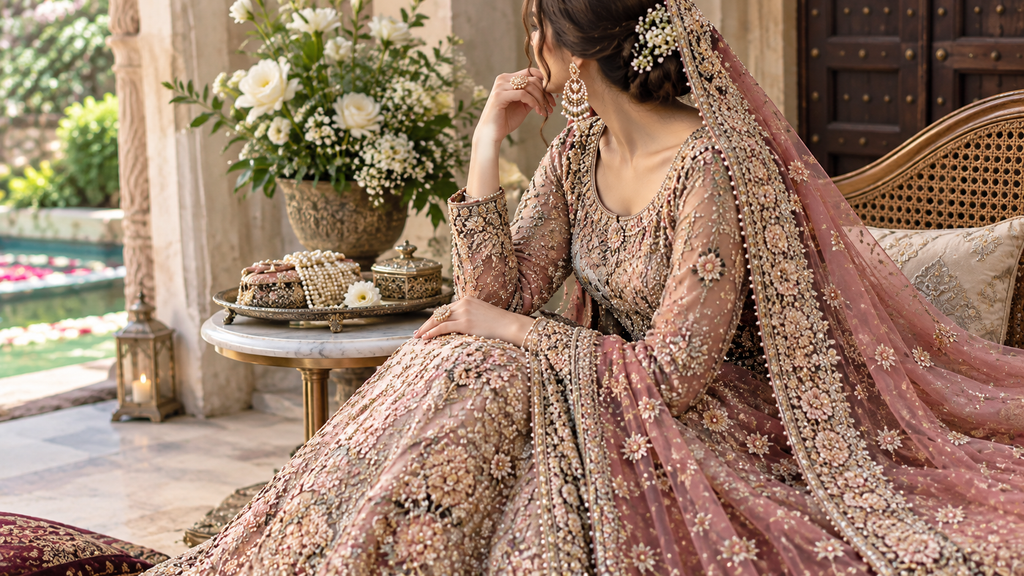
This is where most Pakistani brides land. You find a design you love on a rack, in a lookbook or on a boutique’s page, and you ask for changes. Done well, this gives you most of the benefits of couture without starting from nothing.
Changes Worth Asking For
Colour of thread is the simplest and most powerful change. Swapping bright gold zari for antique gold, or plain silver for a soft champagne tone, can make a familiar design feel entirely new.
Moving the weight is the second. Ask the designer to make the hem border deeper and thin the work on the body of the lehenga or kameez. The outfit will look taller, sit better and weigh less on your shoulders.
Sleeves are the third. Full or three-quarter sleeves with a trailing floral design look beautiful from the stage, and they are one of the easiest places to add personality.
Finally, consider the dupatta separately. If you’re planning a double dupatta look for the barat, one heavy on the head and one light across the arm, tell the designer at the start. Otherwise you may end up with two equally heavy pieces.
Changes That Cause Trouble
Be careful with late changes to the neckline. Once the choli or kameez front is embroidered, reshaping the neck often means removing and redoing work, which costs time and can leave marks.
Also be wary of asking for “just a bit more” kaam everywhere. That request is how a considered design slowly turns back into the heavy, crowded look you were trying to avoid.
A jora should be designed for the stage, the camera and the hours you’ll spend in it, not for the hanger.
Your Level Two Action List
- Decide on one hero zone, such as the border, sleeves or back, and ask for the extra richness there only.
- Request a thread-colour sample before production begins.
- Agree on the dupatta plan, single or double, at the first meeting.
- Get all changes written down, with the delivery date and the number of fittings.
- Lock the neckline design before the embroidery starts.
Level Three: Building A Fully Custom Jora With A Karigar
This is the most rewarding path and the most demanding. You work directly with a designer and their karigars, or with an independent ustad, to create something that exists nowhere else.
Starting With The Khaka
Custom embroidery begins with a khaka, the design drawn to full size and transferred onto the fabric before it goes onto the adda, the wooden frame the karigars work on. This is the stage where your ideas become real, so spend time on it.
Bring references, but don’t bring five different pictures and ask for all of them combined. Choose one mood: heritage, floral, geometric or architectural. Then let the designer build around it. Mughal jaali patterns, garden florals and old family motifs all translate beautifully into modern layouts when they’re given space to breathe.
This is also the moment to add something personal. Initials hidden inside a motif on the daman, a flower from your home town, a pattern redrawn from your mother’s wedding outfit, or the wedding date along the inner edge of the dupatta costs little and becomes the detail you treasure most.
{ https://emanembroidery.store/latest-floral-thread-embroidery-designs-2026-for-elegant-fashion/ }
Choosing Techniques By Function
A fully custom order lets you match the technique to the event.
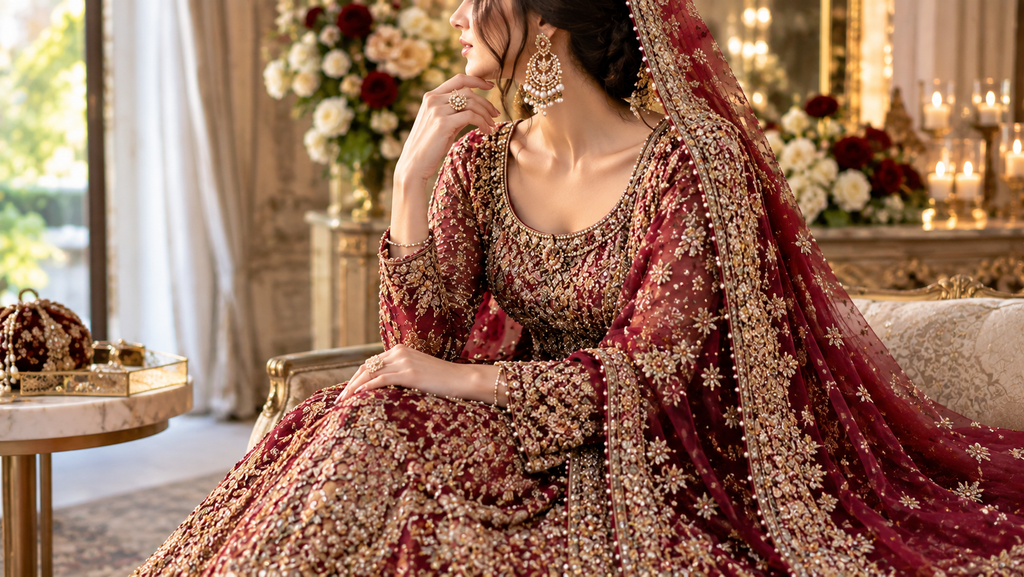
For the barat, zardozi embroidery, tilla and the naqshi give the depth and richness a main-event outfit very needs. Keep the heaviest metal work in the border and the choli, and use lighter thread for the rest.
For the nikah, pearls, tonal resham and a delicate mukesh read as graceful and composed, and which suits a ceremony where you’ll sit still and be the photographed closely.
For the mehndi, gota, mirror work and the colourful resham on light fabric keep you comfortable enough to dance and a relaxed enough to enjoy it.
For the walima, soft metallics and raised florals on organza or tissue create elegant walima dress embroidery that looks polished without the weight of the barat outfit.
If you love regional craft, a custom order is the place for the it. Phulkari, Sindhi mirror and aari work, Balochi embroidery or fine tilla work can appear as a border or an accent, and which carries heritage without turning the outfit into a costume.
Sampling, Timing And Checking The Work
Always ask for a sample panel of the most important section before the full piece goes onto the adda. It’s the only reliable way to see the thread colour, the height of the work and how it catches light.
Handwork takes time, and the peak shaadi season crowds every workshop. Many brides place custom orders several months ahead. Plan generously and confirm the timeline in writing.
When the work is underway, learn to read the reverse side. Handwork has small knots and slightly uneven stitches on the back. Machine work is perfectly regular, often with a backing sheet. Both have their place, and machine embroidery is a sensible choice for lighter functions, but you should always know which one you’re paying for.
Your Level Three Action List
- Choose one design mood and one hero zone before the khaka is drawn.
- Add one personal motif at the sketch stage.
- Match techniques to each function rather than using the same kaam everywhere.
- Ask for a sample panel before full production.
- Do a full-weight wear trial, with the cancan and dupatta, at the second-last fitting.
For Modest And Hijab Brides At Every Level
Many Pakistani brides choose full sleeves, very higher necklines and long kameez silhouettes, and the some wear a hijab for the nikah or the whole wedding. None of this makes the look plain.
The embroidery simply moves. Sleeves become a canvas for trailing florals. The back of the kameez or lehenga can carry a worked panel, and which guests see for the whole walk to the stage. A hijab bridal look comes alive with a fine pearl or the kora edge on the hijab itself, with the dupatta layered over it. A very long kameez daman with a deep border moves beautifully when you sit.
At Level One, look for these details already built in. At Levels Two and Three, ask for them by name.
Where To Start This Week
- Decide your level honestly, based on budget, time and how involved you want to be.
- Save three references that share one mood, not ten that point in different directions.
- Choose your hero zone: border, sleeves, back or dupatta.
- Photograph your jewellery so every design is judged against it.
- Visit or contact your shortlist with those four answers ready. The conversation will be shorter, clearer and much more likely to end in a jora you love.
[https://emanembroidery.store/latest-floral-thread-embroidery-designs-2026-for-elegant-fashion/]
Key Takeaways
- Placement, finish and comfort matter more than the amount of kaam.
- Antique gold, soft silver and raised texture look more current than bright yellow gold and flat thread.
- Ready-to-wear brides win through careful selection, especially of the border, neckline and seam allowance.
- Customising brides should move weight to one hero zone and settle the dupatta plan early.
- Custom brides should get the khaka and sample panel right before anything else.
- Covered and hijab bridal looks shift the embroidery to the sleeves, back and hijab edge.
Summary: The Three Levels At A Glance
| Level | Best For | Your Main Job | Biggest Risk | Key Check |
|---|---|---|---|---|
| One: Ready-To-Wear | Tight timelines, simpler planning | Choosing well | Poor alterations, mismatched dupatta | Border depth and seam allowance |
| Two: Customised Design | Brides who love a design but want it personal | Editing with purpose | Adding “more” until it’s crowded | Thread sample and written changes |
| Three: Fully Custom | Brides with time and a clear vision | Directing the khaka and sample | Delays in peak season | Sample panel and wear trial |
FAQ
Is ready-to-wear good enough for a Pakistani barat?
It can be, especially from brands that do strong handwork. Choose a piece with a deep border and a clean neckline, check the seam allowance, and plan for a separate dupatta if the included one feels too plain or too heavy.
What is a khaka in bridal embroidery?
It’s the full-size design drawing that’s traced onto the fabric before embroidery begins. Every motif, border and placement is decided at this stage, so it’s the best moment to request changes or add a personal detail.
Is machine embroidery a bad choice for a wedding?
Not at all. It’s practical for lighter functions such as mehndi or dholki, and for budget-friendly outfits. For the barat, most brides prefer handwork for its depth, but the right choice depends on budget and design.
Which thread colour looks most modern on a red barat lehenga?
Antique gold is the safest modern choice on wine, maroon and deep red. It looks rich without the brassy shine of bright yellow gold, and it photographs warmly under stage lights.
Can embroidery be added to a jora after it’s stitched?
Some additions are possible, such as a sleeve motif, a dupatta border or a small daman detail. Large changes on stitched garments are harder, so plan significant embroidery before stitching wherever you can.